The Role of AI in Data Center Filtration AI is changing what data centers are, and in the process, it's changing what filtration needs to be. Most of the industry chatter around AI focuses on chips & software developments. But those of us in the filtration...
PFP Blogs
Stay up to date with the latest updates & information from PFP. We regularly post industry insights, informational content, and success stories.High Velocity Flushing Service Saves Steel Manufacturer
Oil Flushing Services Needed After Catastrophic Downtime For the past 3 years, we have been working with a major steel manufacturer in supplying dedicated offline filtration equipment and MRO filter elements for their mill stand lube oil system. They had been needing...
Reverse Engineering Solutions for Hard-to-Find Elements
No Challenge Too Tough When an industrial customer needed a solution for a fabricated inline filter element that was no longer manufactured, they turned to PFP for answers. The customer's original unit couldn't be cleaned effectively, so they shipped it to us for...
Carbon Exchange Service for Boiler Feed Water
A Dairy Products Manufacturer reached out for assistance with a Carbon Exchange Tower Project. Activated Carbon is utilized to treat water in many industrial applications. In this case, carbon media is treating boiler feed water to remove any potential harmful...
Aviation Fuel Contamination: Types, Causes, and Removal
We maintain an expansive selection of rental filtration equipment designed to address aviation fuel contamination without the cost of purchasing.If there’s one thing every pilot, maintenance engineer, and fuel handler agrees on, it’s that clean, dry fuel is...
Nominal vs. Absolute Micron Rating – What’s the Difference?
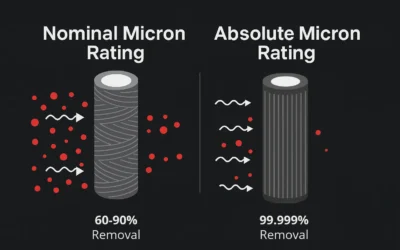
TL;DR: Absolute filters remove ≥98.7% of particles at the rated size; nominal filters remove ~50–95%. Use absolute for precision, nominal for bulk removal or prefiltration. Micron ratings are a critical part of specifying filtration equipment, but the terms nominal...
ISO Cleanliness Codes: Complete Guide to Oil & Fuel Standards
ISO cleanliness codes are the global standard for quantifying solid particle contamination in industrial fluids like oil, fuel, and hydraulics. This guide breaks down how ISO codes work, why they matter, how to interpret them, and how to achieve your target codes with...
Fuel Tank Cleaning: What It Is, Why It Matters, and When to Do It
Fuel storage tanks are the foundation of reliable operations across many different industries. When contaminants find their way into your fuel tank, it is only a matter of time before they threaten operations and regulatory compliance. Fuel tank cleaning helps ensure...
Fuel Polishing vs. Fuel Replacement: Making the Right Choice
Over time, fuel stored in tanks begins to degrade due to environmental exposure and tank conditions. Contaminants such as water, microbial growth, and particulate contamination can compromise its quality, putting both equipment and operations at risk. When...
How to Remove Water from Jet Fuel
Jet fuel needs to meet strict standards before it’s used. One of the most critical is that it remains free of water. When fuel becomes contaminated, it can no longer be trusted to perform safely. The presence of water often leads to system damage, and in the worst...
Want the most up to date information from PFP?
Sign up for our E-mail newsletter!