Water contamination in your aviation fuel?
PFP provides rental filtration equipment and on-site service for bulk aviation fuel cleanup, transfer, and water removal applications.
It is no surprise that jet fuel is required to meet strict cleanliness standards before it moves through aircraft fueling systems.
When water enters the fuel, it creates serious problems for fuel farms, airports, FBOs, and bulk fuel handlers.
Once water is in the system, it can collect at low points, encourage microbial growth, plug filters, and contribute to significant corrosion. In cold conditions, water can also create icing concerns.
Removing water from jet fuel starts with two important question:
What type of water contamination is present, and what is the source?
The answers determine which removal method makes the most sense.
Why Water in Jet Fuel Is a Serious Problem
Water is by far one of the most important and common contamination concerns in aviation fuel handling. Because aviation fuel is used in critical applications where lives are at stake, contamination of any kind cannot be treated casually.
When water remains in a fuel system, it can lead to problems such as:
- Corrosion inside tanks and piping
- Microbial growht at the fuel/water interface
- Sludge formation
- Plugged filters
- Fuel quality issues
- Fueling delays
- Equipment downtime
- Icing concerns in cold conditions
- Endagerment of people & equipment
Even a small amount of water can become a larger problem if it is not addressed early. Water can settle, spread during transfer, or help create secondary contamination inside the system.
How Water Gets Into Jet Fuel
Water can enter aviation fuel systems in more than one way. Some causes are obvious. Others develop slowly over time.
Common sources include:
- Condensation inside storage tanks
- Rainwater intrusion
- Poor tank seals
- Loose fittings
- Contaminated fuel deliveries
- Fuel transfer activity
- Tank maintenance
- Poor sump drainage
- Water collecting at tank bottoms
Because water is heavier than jet fuel, it often settles at the bottom of tanks or collects in low points. That is why regular draining, sampling, and inspection are important parts of aviation fuel maintenance.
Free Water vs. Dissolved Water vs. Emulsified Water
Not all water contamination behaves the same way. Before choosing a removal method, it helps to understand the difference between free water, dissolved water, and emulsified water.
Free Water
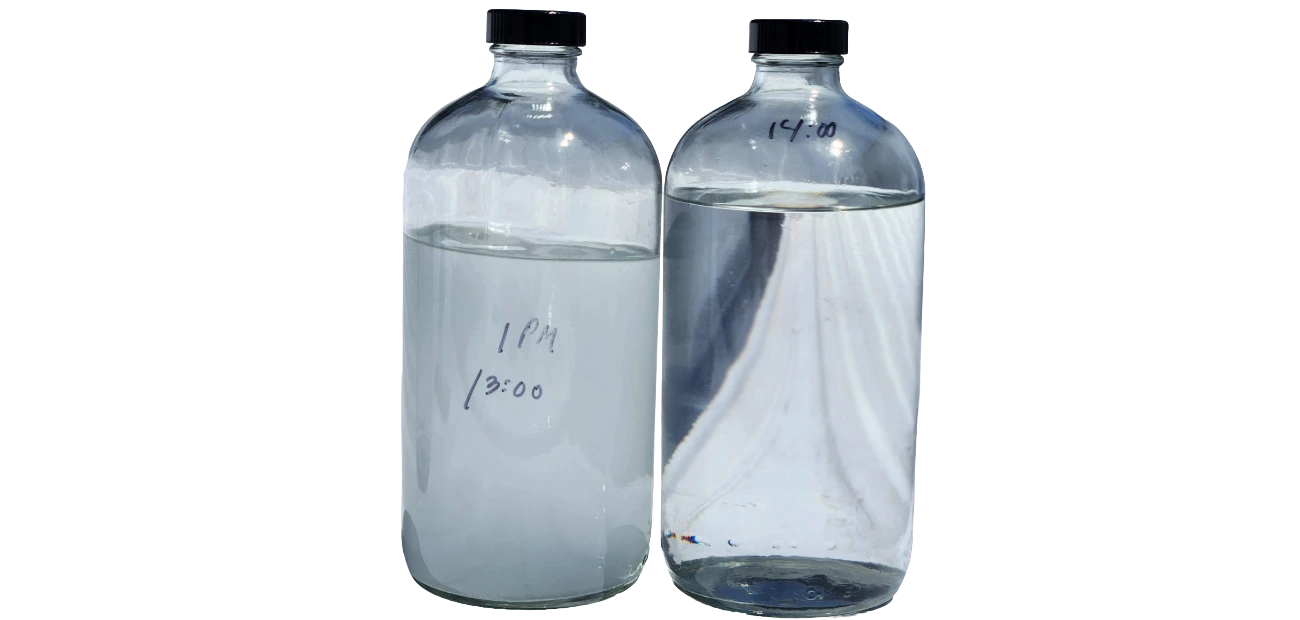
Free water is water that has separated from the fuel. It may appear as visible droplets, haze, or a layer at the bottom of a tank.
This is the type of water most commonly associated with coalescing separation. Since free water is not fully dissolved into the fuel, it can often be removed through draining, settling, or coalescer separator vessels.
Dissolved Water
Dissolved water is moisture held within the fuel itself. It may not be visible during a basic inspection.
Temperature can affect how much water remains dissolved in the fuel. As conditions change, dissolved water may come out of solution and become free water.
Standard coalescing equipment is not always enough to remove dissolved water.
Emulsified Water
Emulsified water is suspended in the fuel as very small droplets. It may make the fuel look cloudy or hazy.
This type of water can be harder to remove, especially when surfactants or additives are present. If the fuel contains emulsified water, additional testing may be needed before selecting equipment.
How Water is Removed from Jet Fuel
The right removal method depends entirely on the condition of the fuel and the form of water present. A site dealing with settled free water may need a different approach than a site dealing with haze or recurring filter issues.
Below are common methods used to remove or control water in jet fuel systems.
Tank Draining and Sump Checks
Because water settles at low points, draining is often the first step. Tanks, sumps, filter vessels, and piping low points should be checked regularly.
Sump checks are especially important after:
- Fuel deliveries
- Heavy rain
- Temperature swings
- Tank maintenance
- Fuel transfer
- Any event that may disturb settled contamination
Draining can remove settled free water. However, it may not solve the full problem if water is suspended in the fuel stream or continues to appear during operation.
Settling
In some situations, fuel can be allowed to sit so water separates naturally. Since water is heavier than jet fuel, it can fall to the bottom of the tank over time.
Settling can help with free water, but it has limits. It takes time. It may not work well during active fueling operations. It also may not remove finely dispersed water from the fuel.
For urgent cleanup or high-flow applications, settling alone is usually not enough.
Coalescer-Separator Vessels
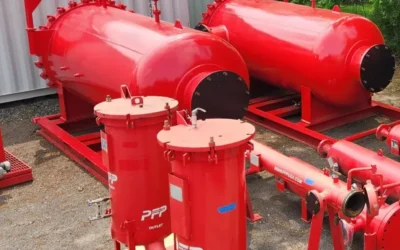
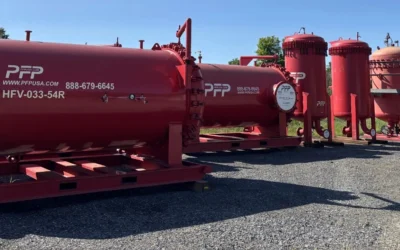
Coalescer separator vessels are commonly used to remove free water from jet fuel.
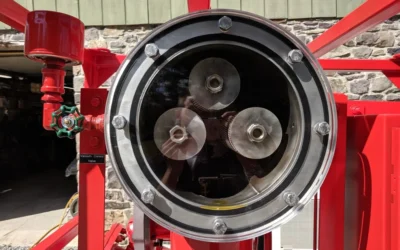
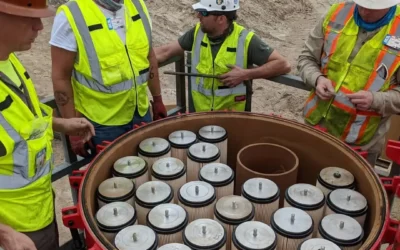
Inside the vessel, coalescing elements capture small water droplets and force them to combine into larger droplets. Once the droplets grow, they are easier to separate from the fuel. Separator elements then help prevent collected water from traveling downstream with the clean fuel.
This method is useful when fuel needs to be processed during transfer, cleanup, or temporary filtration work.
A coalescer separator may be a good fit when:
- Free water is present
- Fuel needs to be processed continuously
- Water appears during transfer
- A tank needs temporary cleanup
- Existing separation equipment is offline
- A short-term project requires added flow capacity
- Buying permanent equipment does not make sense
For temporary applications, PFP offers rental coalescer separator vessels for jet fuel water removal and other compatible hydrocarbon separation needs.
Centrifugal Separation
Centrifugal separators use spinning force to separate materials by density. Since water is heavier than jet fuel, centrifugal equipment can remove water under the right conditions.
This method may be useful in some processing environments. However, it is not always the most practical choice for field rental applications or temporary aviation fuel cleanup.
Chemical Additives
Chemical additives may be used in some fuel treatment programs, but they should not be viewed as a replacement for proper water removal.
Additives can change how water behaves in the fuel. That can affect how easily the water separates. For aviation fuel applications, chemical treatment should be handled carefully and only within applicable fuel quality requirements.
In many cases, the better first step is to identify the type of water present and remove as much free water as possible through proper separation.
Looking for Temporary or Permanent Filtration Solutions for Water in Jet Fuel?
If water contamination is affecting your jet or aviation fuel system, Precision Filtration Products can help determine and supply the right solution for your application.
We maintain one of the country’s largest rental fleets of filtration equipment designed to support bulk aviation fuel handling. Our rental fleet includes:
- Coalescer-Separator Vessels
- Particulate Filter Vessels
- Clay Treaters
- Carbon Vessels
- Filter Skids
- Auxiliary Equipment for Turnkey Solutions
In addition to providing equipment, our team supports fuel cleanup projects with application guidance, equipment sizing, and on-site filtration services when needed.
Our team is always available to discuss your unique application requirements!