Looking for Turbulent Flushing Support?
PFP provides turnkey high-velocity oil flushing services to remove fabrication debris & achieve required cleanliness levels via turbulent flow at Reynolds numbers of 8,000 – 10,000.
Key Takeaway:
A Reynolds number above 4,000 indicates turbulent flow, but that does not automatically mean the flushing velocity is sufficient for effective contaminant removal. High-velocity oil flushing often requires Reynolds numbers from 8,000-10,000.
High velocity oil flushing is designed to generate enough energy to disturb contamination resting on internal surfaces, suspend the released material, and transport it to high-capacity filtration equipment.
The success of this cleaning procedure depends heavily on achieving the proper turbulent flow.
The primary engineering value used to determine whether oil flow is laminar, transitional, or turbulent is the Reynolds number. However, Reynolds number is frequently oversimplified during flushing projects. A value greater than 4,000 is commonly treated as proof that a system is being cleaned effectively.
In reality, Reynolds number greater than 4,000 should be treated as a minimum hydraulic threshold – not a complete flushing specification.
A calculated Reynolds number of 4,000 may indicate that flow has entered the turbulent regime at one location under a specific set of conditions. It does not prove that sufficient cleaning force exists throughout the complete system. It also does not confirm that contamination has been removed.
Precision Filtration Products uses Reynolds number as one part of the engineering process behind its High Velocity Oil Flushing (HVOF) service. Flow rate, actual pipe dimensions, oil viscosity, temperature, pressure loss, temporary piping configuration, and cleanliness data must all be considered when developing an effective flushing procedure.
What is Reynolds Number?
Renolds number is a dimensionless engineering value that compares the intertial forces within a moving fluid to the fluid’s viscous forces.
Inertial forces encourage continued fluid motion and internal mixing. Viscous forces resist movement between adjacent layers of fluid.
The relationship between those forces determines how the fluid behaves inside a pipe.
For flow through circular piping, Reynolds number is calculated as:
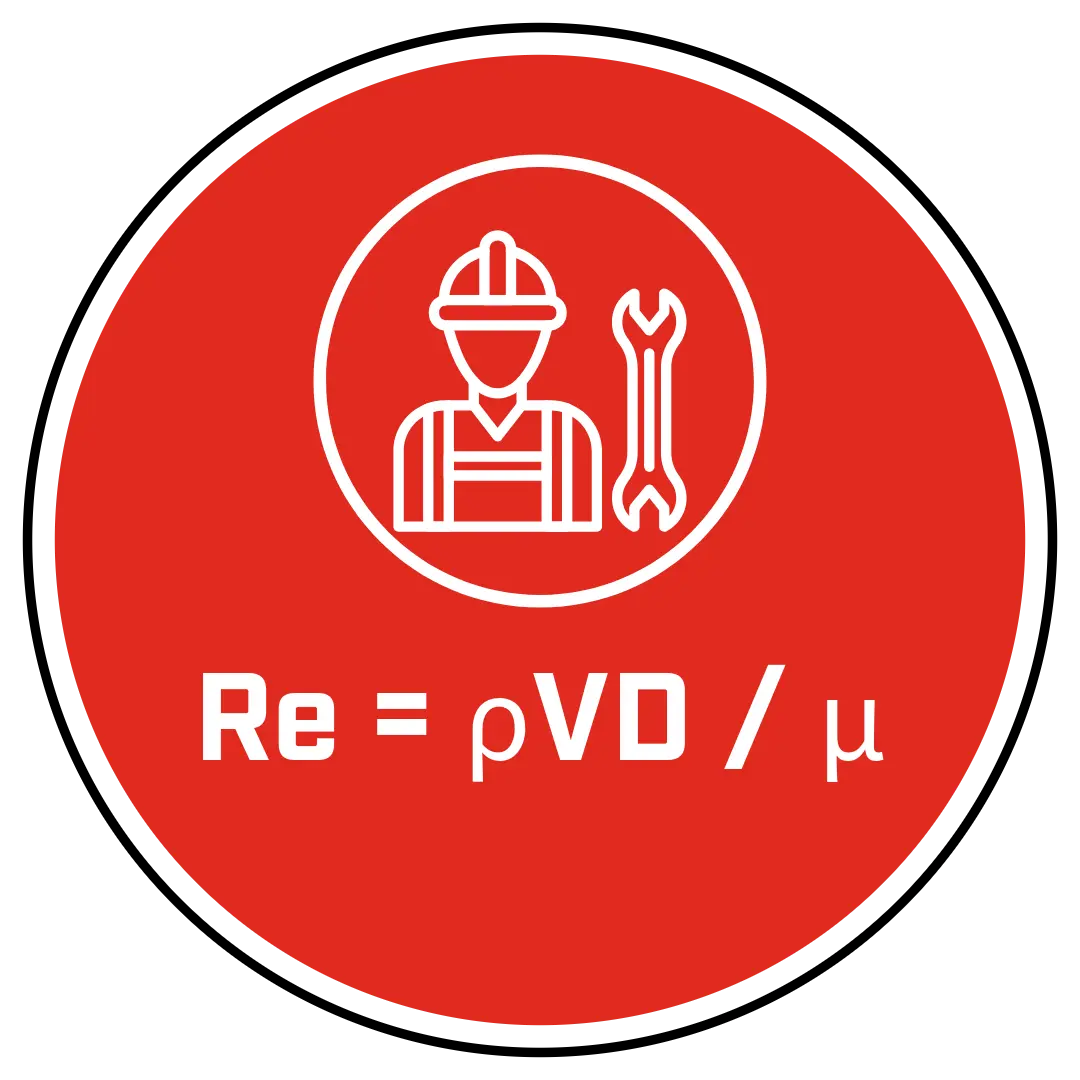
Re = ρVD / μ
Where:
- = Renolds number
- ρ = Fluid density
- V = Average fluid velocity
- D = Actual pipe inside diameter
- μ = Dynamic viscosity
When the fluid’s kinematic viscosity is known, the formula can be written as:
Re = VD / ν
Where:
- ν = Kinematic viscosity
The U.S. Department of Energy identifies velocity, characteristic diameter, density, and absolute viscosity as the physical variables used to determine Reynolds number.
Reynolds number has no unit of measurement. It describes the relationship between the fluid properties and the hydraulic conditions rather than measuring a single physical quantity.
Reynolds Number Formula for Oil Flushing
Industrial flushing calculations are often performed using gallons per minute, pipe diameter in inches, and oil viscosity in centistokes.
For those units, Reynolds number can be approximated using:
Re ≈ 3,160Q / Dv
Where:
- Q = Flow rate in gallons per minute
- D = Actual pipe inside diameter in inches
- v = Kinematic viscosity in centistokes
This field equation makes an important point immediately visible: Reynolds number cannot be determined from gallons per minute alone.
A high pump-flow rating may sound impressive, but its significance depends on the pipe diameter and the oil viscosity at the actual flushing temperature.
Laminar, Transitional, and Turbulent Oil Flow
Pipe flow is generally classified into three regimes.
| Reynolds Number | General Flow Condition |
| Below approximately 2,000 | Laminar |
| Approximately 2,000 to 4,000 | Transitional |
| Above approximately 4,000 | Turbulent |
The precise transition is not perfectly fixed. Pipe roughness, disturbances, fittings, and entrance conditions can influence the point at which turbulence begins.
The Department of Energy classifies values below approximately 2,000 as laminar and values above approximately 3,500 as turbulent, with an uncertain transitional region between them.
For high velocity oil flushing, the distinction matters because each flow regime interacts differently with internal surfaces.
Laminar
Under laminar conditions, oil moves in relatively smooth layers. The fluid near the center of the pipe travels faster, while the fluid nearest the wall moves much more slowly.
There is limited mixing between those layers.
Laminar circulation may transport contamination that is already suspended in the oil. However, it provides less momentum exchange near the pipe wall, making it less effective at disturbing material attached to internal surfaces.
Transitional Flow
Transitional flow is unstable. Parts of the flow may exhibit turbulent behavior while other portions remain closer to laminar.
This instability makes the transitional range unreliable as a flushing target. Small changes in temperature, flow rate, or system resitance may cause the hydraulic condition to move back toward laminar flow.
Turbulent Flow
Turbulent flow contains irregular velocity fluctuations and increased mixing across the pipe.
That increased momentum exchange improves the fluid’s ability to disturb deposited contamination and carry released particles toward the filtration system.
To learn more about flow regimes, read our blog on Laminar vs. Turbulent Flow in System Flushing.
Why a Reynolds Number of 4,000 is Not Enough for High Velocity Oil Flushing
A Reynolds number of 4,000 is commonly referenced because it represents the approximate upper boundary of the transitional flow range. Crossing that boundary indicates that turbulent flow is likely developing.
That does not mean Re = 4,000 represents an optimum cleaning condition.
At 4,000, the flow is only marginally beyond the transition zone. There may be little operating margin available to account for changes in viscosity, temperature, pump performance, filter loading, or flow distribution. A minor change in any one of those conditions can reduce the actual Reynolds number below the intended threshold.
More importantly, Reynolds number describes the flow regime. It does not directly measure the hydraulic force being applied to contamination.
A system can technically achieve turbulent flow while still producing inadequate wall shear in sections that require agressive cleaning. Turbulence indicates that internal mixing is occurring, but it does not establish that the turbulence is sufficiently intense to remove tightly adhered particulate, corrosion products, construction debris, or deposits trapped within compled geometry.
A value of 4,000 calculated at the main flushing header also does not prove that the same Reynolds number exists throughout the system. Larger piping, parallel branches, coolers, manifolds, bearing supply lines, and temporary bypasses may each receive a different percentage of the total flow.
For that reason, Re > 4,000 should be interpreted as the minimum condition required to move beyond transitional flow, not as evidence that the entire lubrication system is being cleaned effectively.
Reynolds numbers are often required to approach 8,000 – 10,000 for optimal system cleaning in high velocity flushing applications.
An engineered high velocity flush should establish additional margin above the transition point wherever system limitations allow. The appropriate operating Reynolds number must be evaluated alongside flow distribution, pressure capability, oil temperature, and the required cleanliness criteria.
PFP identifies Reynolds numbers greater than 4,000 as the typical baseline for inducing turbulent flow during high velocity oil flushing. The project must then be engineered and monitored so that turbulent conditions are maintained throughout the required flushing paths.
PFP Supports High Velocity Flushing Applications Requiring High Reynolds Number
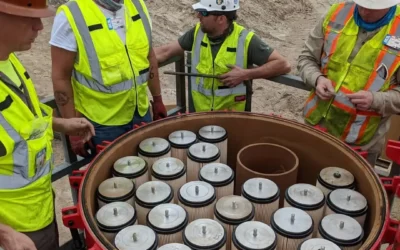
For over 20 years, PFP has been suppling the engineered equipment and on-site support required to achieve and maintain high Reynolds numbers during high velocity oil flushing.
Our team will perform a full application assessment before prescribing a flushing solution, examining:
- Pipe diameter
- Required flow rate
- Oil viscosity
- Operating temperature
- System pressure limitations
- Specified cleanliness requirements
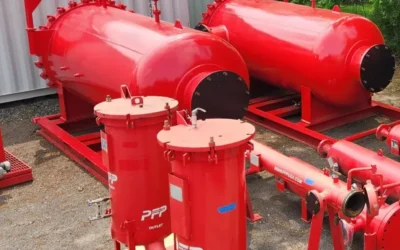
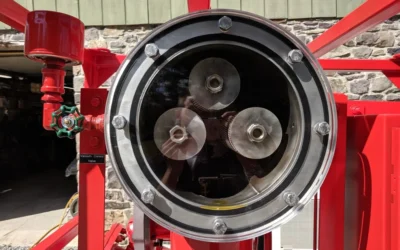
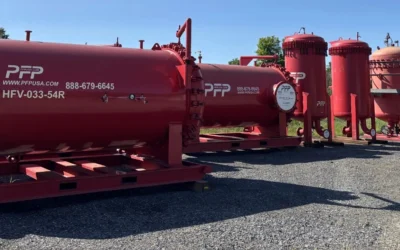
PFP can supply high-capacity flushing skids, filtration vessels, and heating equipment designed to produce stronger turbulent conditions while continuously removing mobilized contamination.
Each project is planned around the actual system geometry and cleanliness requirements, not a generalized flow-rate target.
For immediate turbulent flushing support, call (888) 679-6645.
Our expert specialists are always available to discuss your unique flushing project requirements. To learn more, call or submit a form on our contact page.