Need to Remove Dissolved Water from Industrial Oil?
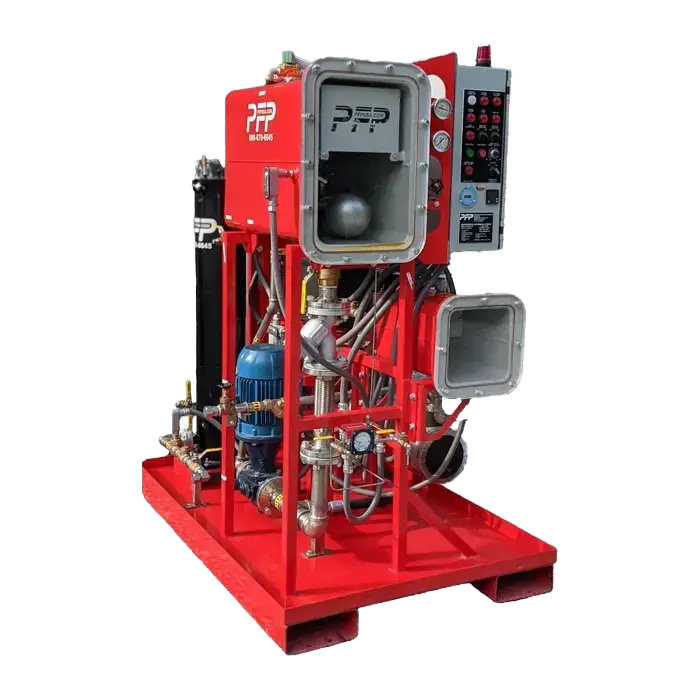
PFP offers industrial vacuum dehydrators for removing free, emulsified, and dissolved water from hydraulic and lubrication oils.
Understanding Dissolved Water in Industrial Oil
Water contamination is a common concern in industrial hydraulic and lubrication systems. Although visible water droplets and cloudy oil are clear indicators of contamination, moisture can also exist within oil without any noticeable change in appearance.
This is known as dissolved water, and it is particularly challenging to remove using conventional filtration methods.
Dissolved water exists as the molecular level within the oil, rather than as separate droplets that can be captured or separated mechanically. Even oil that appears completely clear may contain measurable concentrations of moisture.
The amount of water that an oil can hold in its dissolved state depends on several factors:
- Oil composition: Base oil chemistry and additive formulations influence water solubility.
- Temperature: Warmer oil can generally hold more dissolved water than the same oil at lower temperatures.
- Oil condition: Oxidation, degradation products, and contamination can alter water saturation characteristics.
Once the oil exceeds its water saturation limit, additional moisture may appear as emsulsified or free water.
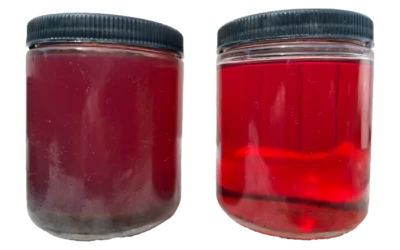
This distinction is important because an oil sample that appears clear at operating temperature may become cloudy as the equipment cools, when the oil can no longer retain the same quantity of dissolved moisture.
Why Dissolved Water Is Difficult to Remove
Unlike free water, dissolved moisture cannot simply be drained from the bottom of a reservoir.
Conventional particulate filters are designed to capture suspended solid contaminants, while water-separating technologies such as coalescers and centrifuges primarily address water present as a separate liquid phase.
Although these methods can be effective for certain contamination conditions, they generally cannot achieve substantial removal of water that remains dissolved within the oil.
This creates a challenge for facilities attempting to maintain low moisture concentrations in critical hydraulic and lubrication systems.

For example, removing accumulated free water from a reservoir may improve the oil’s appearance while leaving a significant amount of dissolved moisture behind. If the system continues operating under unfavorable conditions, that remaining water can contribute to corrosion, lubricant degradation, and premature component wear.
Effective dissolved water removal requires a process capable of transferring moisture out of the oil solution itself.
How Vacuum Dehydration Removes Dissolved Water from Oil
Vacuum dehydration is one of the most effective industrial methods for removing dissolved water from hydraulic and lubrication oils.
The process uses reduced pressure & controlled temperature, combined with an increased oil surface area to encourage moisture to vaporize and then separate from the fluid.
Rather than relying on mechanical separation alone, vacuum dehydration promotes the transfer of dissolved moisture from the oil into a vapor phase that can be removed from the system.
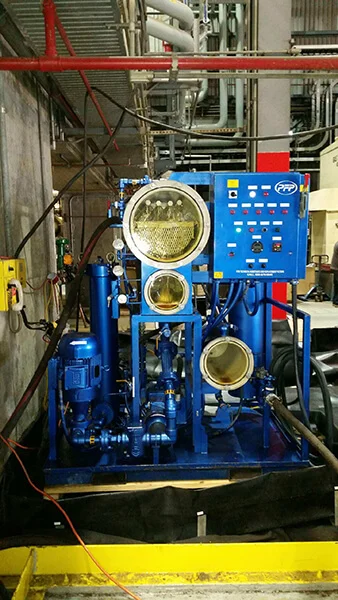
The process generally follows these steps:
- Oil enters the dehydration system. Contaminated oil is circulated from the equipment reservoir through the vacuum dehydrator.
- The oil is conditioned. Depending on the equipment design, controlled heating helps establish suitable operating conditions for moisture removal.
- Oil enters a vacuum chamber. Reduced pressure promotes water evaporation at temperatures below its normal atmospheric boiling point.
- Moisture is extracted. Dissolved water migrates from the oil and enters the vapor phase, aided by increased surface area and the pressure conditions within the chamber.
- Processed oil returns to the system. The oil can be circulated through the dehydrator repeatedly until the desired moisture concentration is reached.
Because vacuum dehydration can remove free, emulsified, and dissolved water, it is particularly useful when facilities need to achieve moisture levels below an oil’s saturation limit.
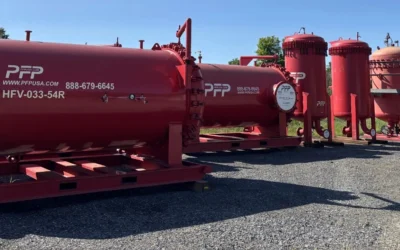
Vacuum dehydrators are available for sale from Precision Filtration Products in flow rates ranging from 1-100 GPM, with equipment configurations suited to a variety of oil purification applications.
Why Temperature and Vacuum Pressure Matter
Two of the most important operating variables in vacuum dehydration are oil temperature and the pressure maintained inside the vacuum chamber.
At atmospheric pressure, pure water boils at approximately 212°F (100°C). Under reduced pressure, its boiling temperature decreases.
This allows vacuum dehydration equipment to promote moisture evaporation without requiring the oil to reach water’s normal atmospheric boiling temperature.
Temperature also affects oil viscosity and moisture transfer. Increasing the processing temperature within the equipment’s approved operating range can improve flow characteristics and facilitate water removal.
However, excessively high temperatures may accelerate oil degradation or affect temperature-sensitive fluid components. Similarly, vacuum conditions must be compatible with the oil formulation and equipment design to avoid undesirable losses of volatile constituents.
The most effective operating conditions depend on the oil’s properties, contamination level, and required moisture concentration.
How Low Can Dissolved Water Levels Be Reduced?
The final moisture concentration achievable through vacuum dehydration depends on the fluid, operating conditions, equipment design, and duration of processing.
Some industrial vacuum dehydration systems can reduce water concentration to very low parts-per-million (PPM) levels. Precision Filtration Products offers vacuum dehydrators capable of achieving water concentrations as low as 20 PPM under suitable multi-pass operating conditions.
However, there is an important distinction between removing water from heavily contaminated oil and reducing already low moisture concentrations even further.
When an oil contains substantial free or emulsified water, dehydration may initially remove moisture relatively quickly. As the concentration decreases and the remaining moisture becomes predominantly dissolved, the water removal rate can slow considerably.
Conclusion: Removing Dissolved Water Requires the Right Approach
Dissolved water can remain in hydraulic and lubrication oils even when the fluid appears clean and free of visible contamination.
Because this moisture exists within the oil solution, conventional particulate filtration and mechanical water separation methods generally cannot remove it effectively.
Vacuum dehydration provides a method of extracting dissolved moisture by promoting evaporation under reduced pressure. When properly applied, it can help facilities maintain lower moisture concentrations, protect critical equipment, and extend usable oil life.
For systems experiencing recurring contamination, addressing the source of water ingress and establishing a suitable monitoring program are equally imporant.
Need to remove dissolved water from industrial oil? Call PFP at (888) 679-6645.
Precision Filtration Products offers industrial vacuum dehydrators for sale and rental, with equipment available in multiple flow rates and configurations for hydraulic, turbine, gear, and lubrication oil applications.