Need fuel system flushing after dewatering?
PFP provides aviation fuel system flushing after dewatering and drying to remove remaining particulate and commissioning debris. Give us a call at (888) 679-6645.

Hydrostatic testing is an important part of commissioning new airport fuel hydrant piping. Once construction is complete, water can be introduced into the system and pressurized to verify the strength and integrity of the piping before it is placed into aviation fuel service.
Passing the pressure test, however, does not mean the system is ready for Jet A.
The water used during hydrostatic testing must be thoroughly removed. In a large airport hydrant system, the process can be more complicated than simply opening a drain and allowing the piping to empty.
Where Residual Water Remains After Hydrostatic Testing
Airport fuel hydrant systems can contain long underground pipe runs with changes in elevation, hydrant laterals, valves, and other areas where complete drainage is difficult.
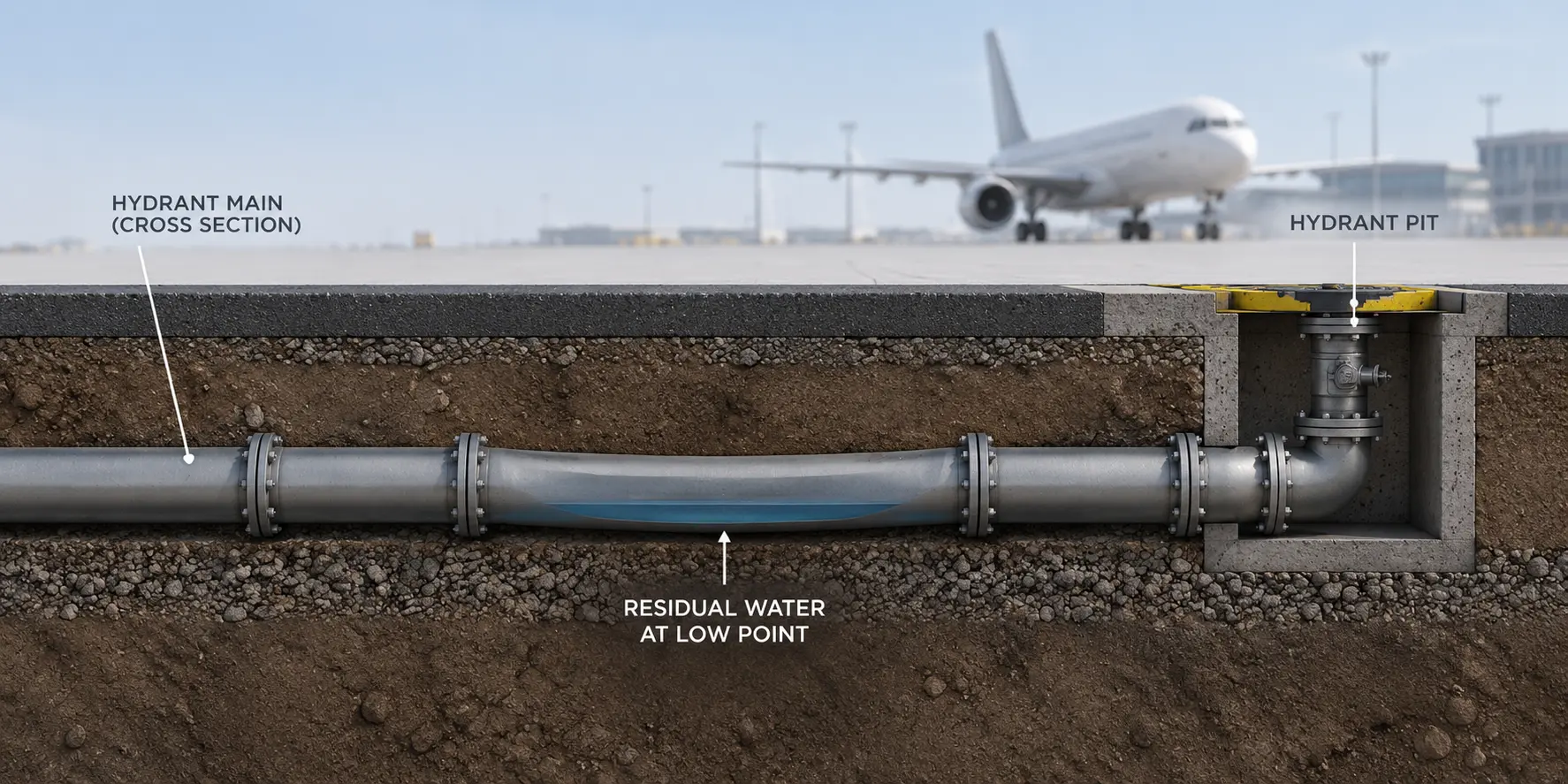
After the majority of the hydrotest water has been removed, smaller quantities can remain trapped at low points or along the internal surface of the piping.
This matters because aviation fuel systems operate under strict fuel cleanliness requirements. The Energy Institute addresses this issue specifically in EI 1594, which provides guidance for pressure strength testing airport fuel hydrant systems with water and the dewatering and drying procedures required afterwards.
The standard emphasizes thoroughly drying before the hydrant system enters service so residual water does not affect the cleanliness of the aviation fuel.
Draining Alone May Not Be Enough
Removing bulk water is only the beginning of the process.
EI 1594 recommends removing as much water as possible through draining and pigging before subsequent drying procedures are performed. This reduces the amount of moisture that must be removed through vacuum drying, air drying, or other methods specified for the project.
The condition of the hydrotest water can create another concern.
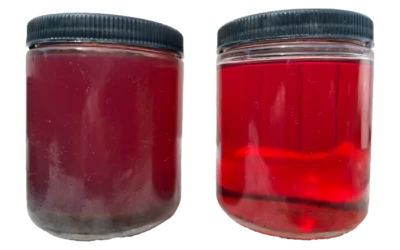
When residual water evaporates inside the piping, dissolved minerals do not necessarily leave with it. EI 1594 notes that remaining water can leave scale and calcium deposits after drying, particularly when hard water has been used for the pressure test.
Those deposits now become foreign material inside piping that will eventually carry aviation fuel.
Preparing the Hydrant System for Fuel Service
Dewatering and drying therefore have a direct connection to the cleanliness of the finished fuel system.
The objective is to remove the hydrotest water while leaving the internal piping in a condition suitable for commissioning. The system must then be prepared for the introduction of aviation fuel without carrying residual water or material left behind from construction and testing downstream through the hydrant network.
This is also where the condition of the piping after drying becomes important.
Construction activity can leave particulate inside a new system. Drying can leave deposits from the hydrotest water. Material that remains inside the piping may be disturbed once fuel begins moving through the system at operating flow rates.
A controlled cleaning and commissioning process allows that material to be removed before the hydrant system enters normal aircraft fueling services.
Flushing After Dewatering and Drying Airport Hydrant Systems
Once hydrotest water has been removed and the system has been properly dried, flushing and filtration can be used as part of the final preparation of the fuel piping.
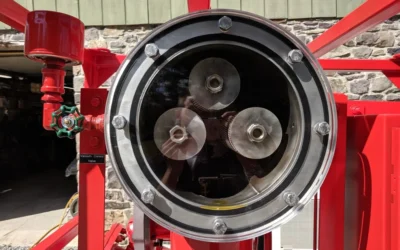
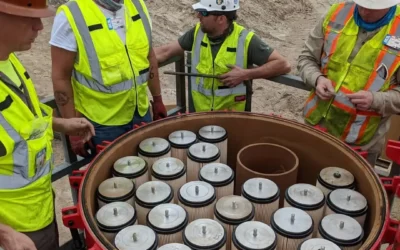
Fuel circulated at the required flow conditions can mobilize remaining particulate while temporary filtration equipment captures contamination removed from the system. The process can continue until the required cleanliness criteria for the project are achieved.
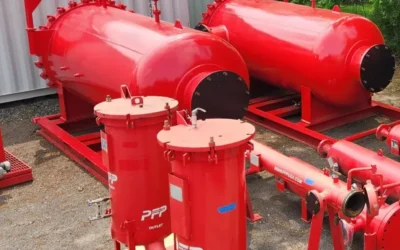
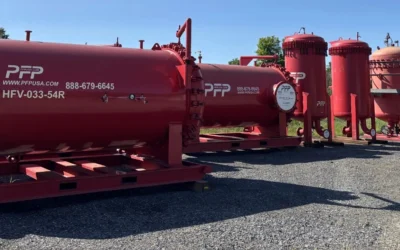
Precision Filtration Products provides Aviation Fuel System Flushing Services for aiport fuel infrastructure including new piping, hydrant system modifications, and commissioning projects. Temporary high flow filtration systems can be configured around the airport fuel system to support controlled flushing and contamination removal before the affected piping is placed into service.
To discuss an airport fuel system flushing project, call (888) 679-6645.
Our expert specialists are always available to discuss your unique flushing project requirements. To learn more, call or submit a form on our contact page.