
Carbon Vessels
Industrial carbon vessels for sale, including activated carbon filter vessels for liquid treatment. Explore applications, design features, and sizing options.


Get pricing, availability, and lead times from our specialists.
Activated Carbon Vessels for Sale
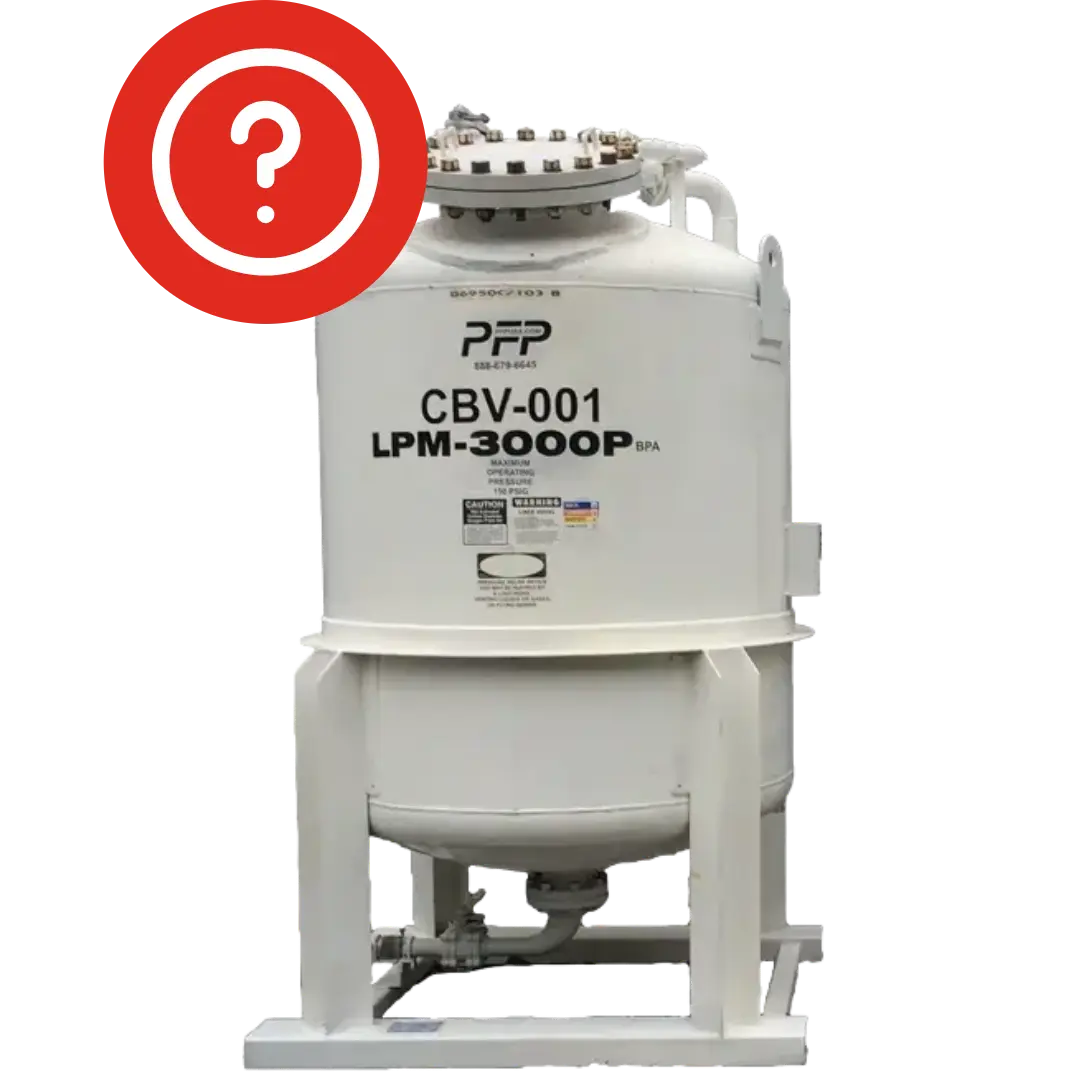
We sell Carbon Adsorbers & Carbon Vessels for a wide variety of industrial applications. The liquid phase adsorbers are prefabricated steel vessels engineered to remove contaminants from low pressure liquid streams at moderate flow rates. The steel adsorbers are provided with lifting lugs and are mounted on a fork truck mobile base for easy placement and carbon exchange service.
Full-Service Carbon Vessel Support
We can provide a total service package that includes utilizing trained personnel providing on-site carbon changeouts, packaging and transportation of spent carbon for recycling at our reactivation facilities, where the contaminants are thermally destroyed. We provide instructions on sampling the spent carbon and completion of our spent carbon profile form. Spent carbon acceptance testing can be performed at our certified laboratory. When requested, a certificate of reactivation will be issued.
Have questions? (888) 679-6645
Contact Precision Filtration Products for help reviewing your project requirements and carbon vessel application. Our team can quickly provide a solution suitable for your unique needs.
how it works
Liquid Phase Carbon Vessels: How Do They Work?
Liquid phase carbon vessels use activated carbon adsorption to remove selected dissolved contaminants from water and other compatible process fluids.
As liquid flows through the activated carbon bed, contaminants accumulate on the carbon’s porous internal surfaces. The treated liquid exits the vessel while the adsorbed compounds remain within the media.
Treatment effective depends on several operating conditions:
- Flow Rate: Determines how quickly liquid passes through the adsorption bed.’
- Contact Time: Influences the opportunity for contaminants to be adsorbed.
- Contaminant Concentration: Affects carbon loading and the rate at which media becomes exhausted.
- Carbon Selection: Different activated carbon grades provide varying adsorption characteristics.
- Operating Conditions: Temperature, competing contaminants, and liquid chemistry can affect performance.
For applications requiring additional treatment reliability, multiple carbon vessels may be installed in series using a lead-lag configuration.
Accessories & On-Site Support
We can supply you with the temporary Cargo Hose, Gate Valves, Tees, Elbows, Pump, Portable Containment, and many more to provide you a complete turnkey set up. We have service crews available to set up, monitor, and breakdown the temporary systems as well.
- Emergency Treatment
- Decolorization
- Product Purification
- Drinking Water Treatment
- Wastewater Treatment
- Groundwater Treatment
- Well Water Treatment
- Process Water Filtration
- Vacuum truck emissions
- Truck and rail car loading
- Pipeline cleaning/pigging
- Tank degassing and tank cleaning emissions
- Refinery turnarounds
- Adaptable – Adsorber is charged with the media best suited for the application: oil absorbent, filter media, virgin or reactivated carbon
- Dependable – Operates continuously with minimal maintanence
- Durable – Adsorber is heavy steel construction lined with a resistance and maximum service life
Frequently Asked Questions
How long does activated carbon last before it needs to be replaced?
Carbon life depends on contaminant load, flow rate, and contact time. In most industrial applications, carbon vessels are monitored using outlet sampling and breakthrough indicators. Once breakthrough occurs, carbon must be changed out or reactivated.
Can carbon vessels remove both organic contaminants and odors?
Yes. Activated carbon is highly effective at removing dissolved organic compounds, hydrocarbons, PFAS precursors, VOCs, taste/odor compounds, and other organics from water or process fluids. However, it does not remove solids or dissolved metals without upstream or downstream treatment stages.
What information is needed to size the correct carbon vessel for my project?
To select the right vessel, providers typically need flow rate, contaminant type, inlet concentrations, desired outlet limits, temperature, and expected operating duration. This ensures the proper carbon volume, contact time, and media grade.
Are rental carbon vessels suitable for emergency spill or contamination events?
Yes. Rental carbon adsorbers are frequently used for emergency response, spill cleanup, tank cleanouts, refinery turnarounds, and temporary water treatment setups. They can be deployed quickly and paired with pumps, hoses, and other temporary equipment.
How is spent carbon handled and disposed of?
Spent carbon is typically sent to a certified facility where it is either thermally reactivated or properly destroyed depending on the contaminant profile. Prior to transport, spent carbon characterization and acceptance testing are performed to meet regulatory requirements.
Want the most up to date information from PFP?
Sign up for our E-mail newsletter!
Want the most up to date information from PFP?
Sign up for our E-mail newsletter!