Using Too Many Filter Elements?
The right vessel size and filtration configuration can reduce change-outs, downtime, and operating cost. Call (888) 679-6645.
Frequent filter change-out increases element consumption, labor requirements, downtime, and overall operating cost.
In many industrial filtration systems, excessive change frequency can be indicate that the vessel configuration, filtration area, micron selection, or strategy is poorly matched to the application.
Reducing filter change-outs begins with understanding why differential pressure is increasing and where solids are being captured.
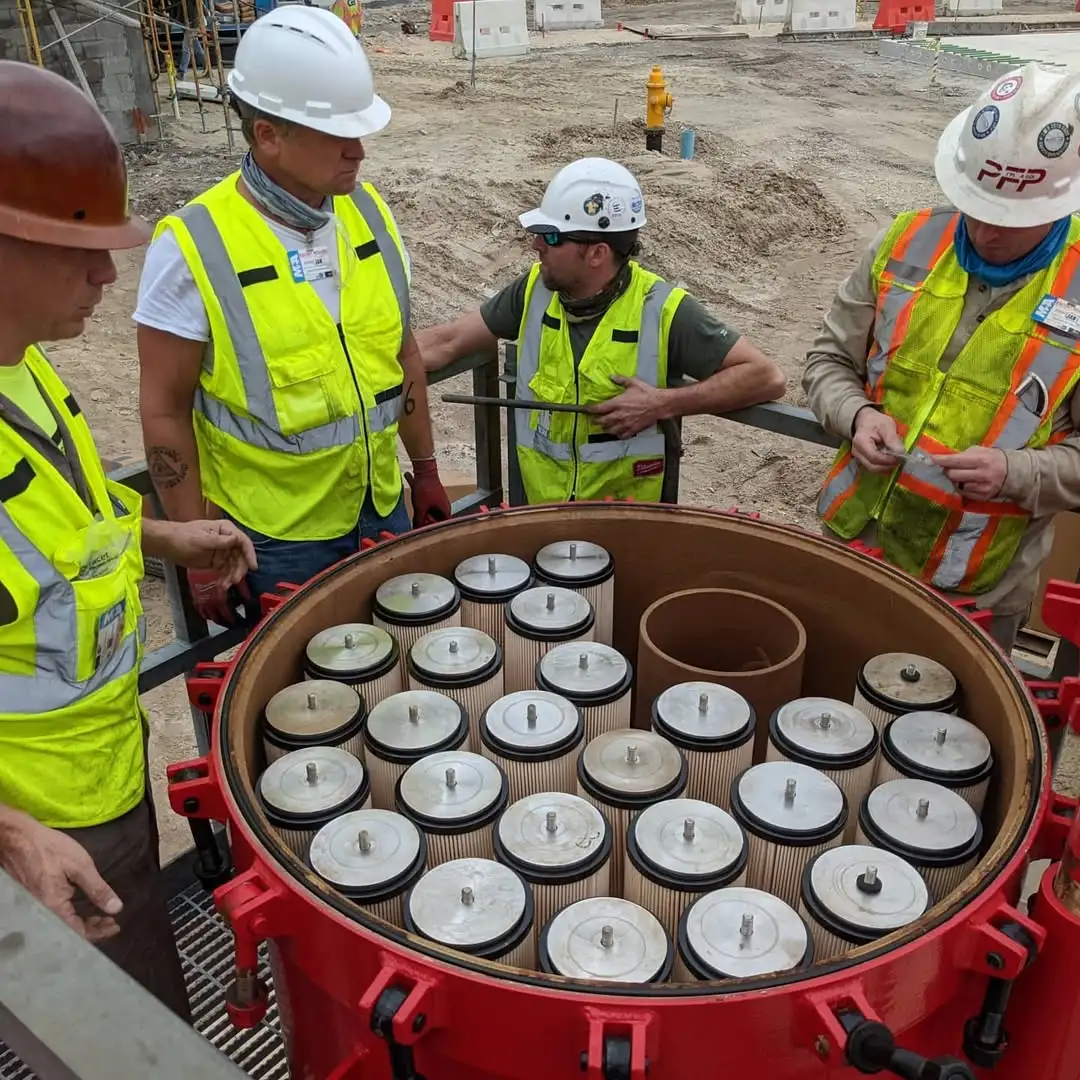
In short, the following factors all influence how quickly filter elements reach their usable capacity in industrial applications:
- Flow rate
- Contaminant loading
- Filter surface area
- Fluid viscosity
- Filtration efficiency
- System cleanliness
Increasing Effective Filtration Area
One of the most direct ways to extend filter life is to increase the amount of filtration area available to the system.
When the required flow is distributed across more filter media, the contaminant load is spread over a larger surface area. This generally slows differential pressure increase and allows elements to remain in service longer.
Additional filtration area can be achieved by:
- Using a larger filter vessel
- Increasing the number of filter elements
- Selecting elements with greater usable media area
- Installing multiple vessels in parallel
This becomes especially important in high-flow systems. A vessel may technically pass the required flow rate while still operating with insufficient filtration area for the contaminant load. The result is acceptable initial flow followed by rapid pressure increase and frequent element replacement.
For temporary projects, moving to a larger filter vessel rental can sometimes reduce operating cost even if the vessel itself is larger or more expensive to mobilize.
Controlling Flow Velocity Through the Filter Media
Total system flow and flow through the media are not the same design consideration.
Forcing a high flow rate through limited filter area increases face velocity through the filter media. That can increase clean differential pressure while accelerating element loading and reducing usable dirt-holding capacity.
In high-flow applications, the goal should be to provide enough media area that the required system flow can be maintained without driving excessive velocity through each element.
This is one of the reasons that high flow filter vessels are used in large pipelines, refineries, fuel transfer, flushing, and commissioning projects.

Greater vessel capacity allows the flow to be distributed across more filtration area instead of forcing the entire process stream through a smaller element bank.
The correct configuration should therefore be based on both required GPM and required media area.
Using Staged Filtration When Contaminant Loading Is High
Fine filtration should not always be the first filtration stage.
New piping, tank bottoms, flushing operations, hydrostatic testing, commissioning, refinery maintenance, and contaminated fuel systems can contain high concentrations of rust, scale, sediment, construction debris, and other solids.
Sending that contamination directly into fine filtration can consume filters quickly.
A staged approach may begin with a coarser micron rating to remove larger particulate, followed by progressively finer filtration as system cleanliness improves.
For example:
A heavily contaminated system may begin with relatively coarse filtraiton, then move through intermediate filtration before reaching the final cleanliness target.
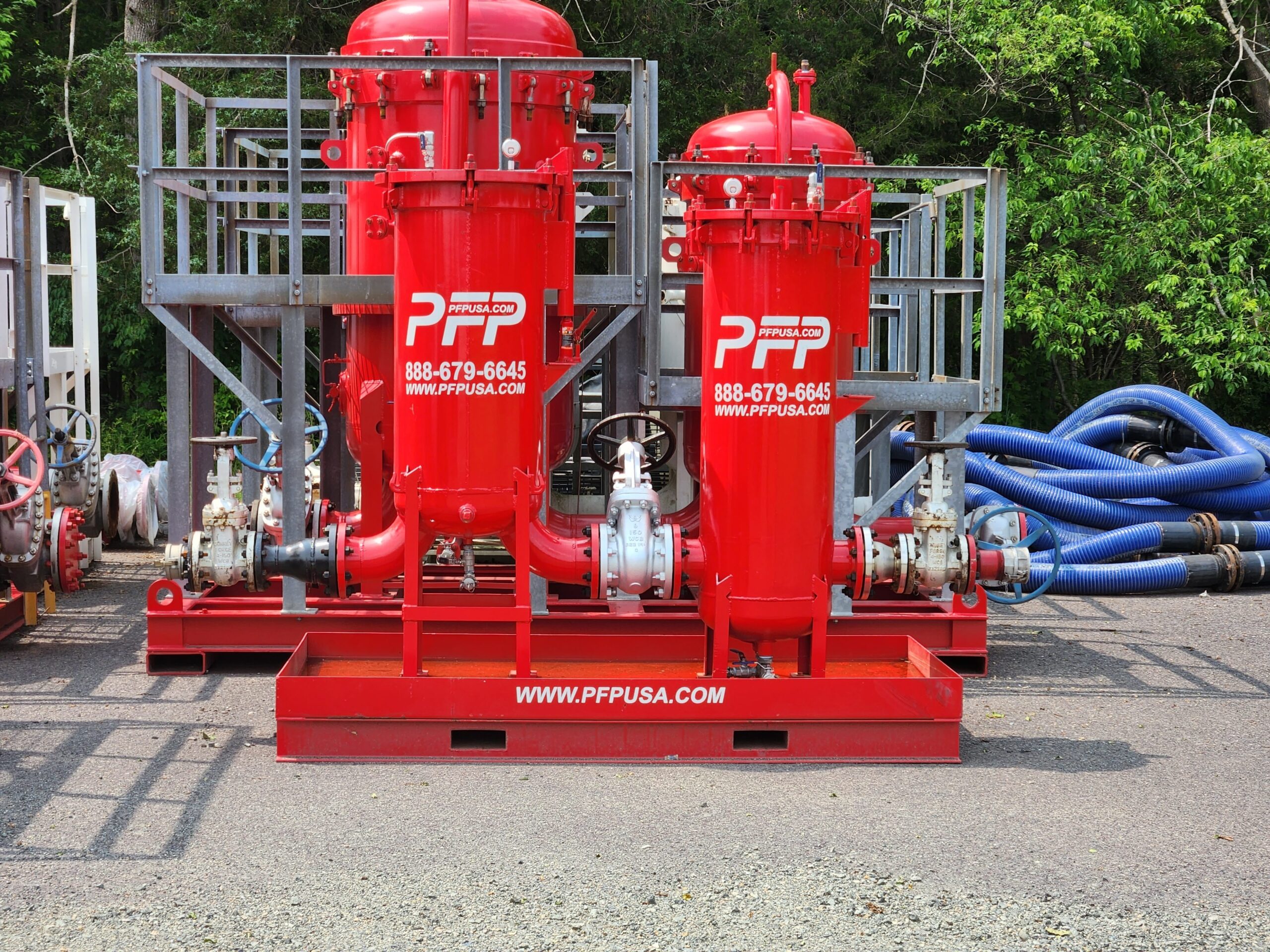
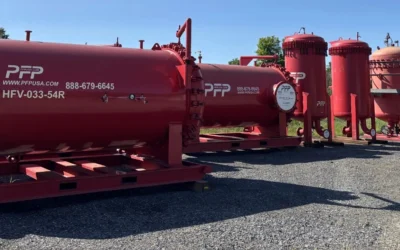
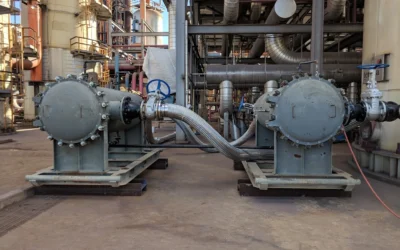
The picture above shows a dual-stage filter skid from PFP. This piece of equipment consolidates two filter vessels onto a single skid for easy transport and operation.
Exact micron progression depends entirel on the fluid and contamination profile, as well as downstream equipment and required cleanliness level. The objective is to avoid using expensive fine media to capture solids that could have been removed efficiently upstream.
Properly Matching the Micron Rating to the Cleanliness Requirement
Selecting a micron rating that is significantly finer than the application requires can unnecessarily increase filter consumption.
Finer media generally produces greater resistance to flow and may load more quickly in contaminated systems. A 3-micron element should therefore not be selected simply because it sounds better than a 10- or 25-micron element.
Micron selection should be based on factors such as:
- Downstream component tolerances
- Required ISO cleanliness levels
- Process specification
- Contaminant particle sizes
- Equipment manufacturer requirements
- Required final product cleanliness
In short, the goal is not to install the finest filter possible. The goal is to achieve the required cleanliness efficiently.
Monitor Differential Pressure Across the Vessel
Differential pressure is one of the most useful indicators of filter loading.
A clean filter begins with a relativel low pressure differential between the vessel inlet and outlet. As contamination accumulates in the media, resistance increases and the pressure differential rises.
Monitoring this change allows operators to determine when elements are approaching their usable loading capacity.
It also prevents two common problems:
- Changing elements too early: filter life is wasted and element consumption increases.
- Changing elements too late: Flow becomes restricted, pump performance may be affected, and the system may no longer achieve the required turnover rate.
Differential pressure should therefore be monitored thorughout the filtration process rather than relying solely on elapsed operating hours.
A rapid increase in differential pressure can also indicate that the system is undersized for the contaminant load or that the selected micron rating is too fine for the current stage of the project.
Use Parallel Filter Vessels for High Flow or Heavy Solids Loading
Multiple vessels operating in parallel can provide significant advantages on demanding filtration projects.
Parallel operation increases total filtration area while dividing flow across multiple housings. This reduces the hydraulic load placed on each vessel and increases the total amount of contaminant that can be captured before filter change-out is required.
Parallel systems can also be configured so individual vessels can be isolated while the remaining equipment continues operating.
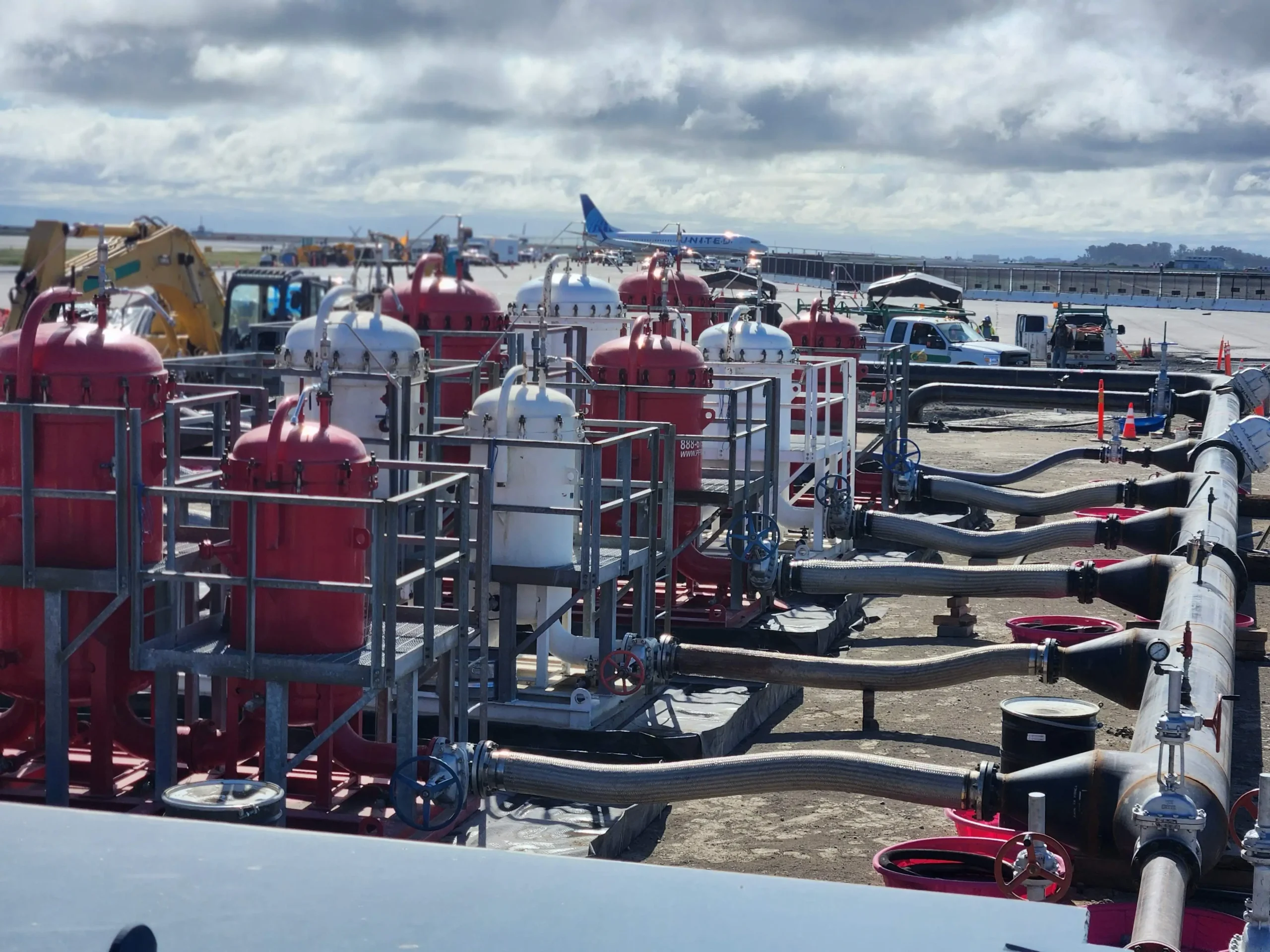
This is useful for projects where continuous filtration is important, including:
- Pipeline flushing
- Refinery turnarounds
- Fuel transfer
- Large tank circulation
- Commissioning
- Temporary process filtration
In these applications, the cost of additional vessel capacity may be offset by fewer filter changes, reduced labor, lower process interruption, and faster completion of the filtration work.
Treating Excessive Filter Consumption as a System Problem
High filter consumption should prompt a thorough review of the complete filtration setup.
The issue may be caused by a wide variety of hindrances, including insufficient filter area, excessive media velocity, overly fine filtration, high solids loading, poor staging, or an undersized vessel configuration.
Evaluating the system as a whole can often reduce change-out frequency without compromising cleanliness requirements.
When reviewing operating data, the following aspects should be considered:
- Flow rate
- Fluid type & viscosity
- Operating temperature
- Inlet and outlet pressure
- Differential pressure
- Contaminant type and concentration
- Micron requirement
- Required cleanliness level
- Expected filtration duration
PFP can use these conditions to help determine the appropriate vessel size, filter configuration, element quantity, and filtration sequence for the application. Filter vessels are available for both rental and purchase, including high-capacity configurations for temporary and permanent industrial filtration systems.
Reducing filter change-outs is ultimately a matter of giving the filtration system enough capacity to handle the actual hydraulic and contaminant load of the job. When vessel size, media area, micron rating, and filtration sequence are properly matched to the application, element consumption can be reduced without sacrificing flow or cleanliness.
If you’re having issues with frequent element change-outs, call PFP at (888) 679-6645.
Our expert specialists are always available to discuss how to make your process filtration more efficient. To learn more, call or submit a form on our contact page.