High viscosity limiting flushing performance?
If your system can’t reach turbulent flow, viscosity may be the issue. Heater skids reduce fluid thickness and help your flushing setup perform as intended.
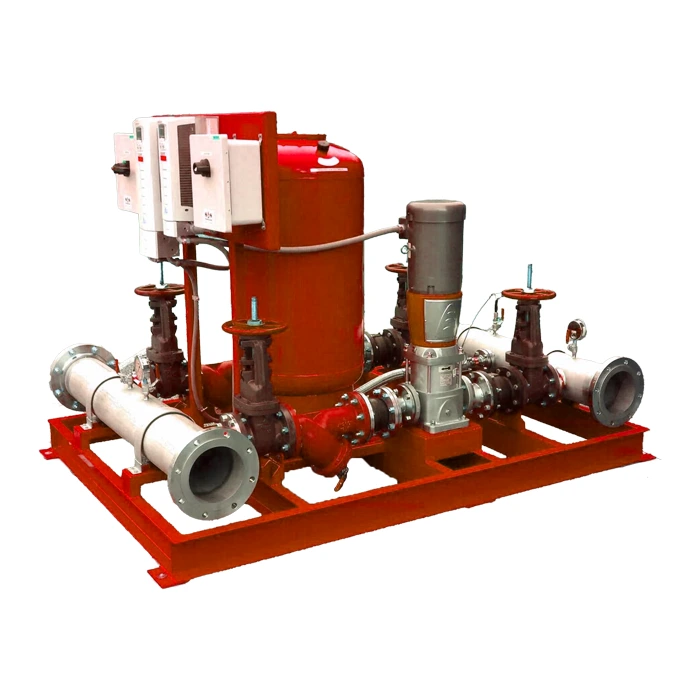
High velocity flushing is one of the most effective methods for removing contamination from piping systems, reservoirs, or critical equipment.
But in many cases, one key factor limits flushing performance: fluid viscosity.
This is where heater skids come into play.
Why Viscosity Matters in High Velocity Flushing Operations
The goal of high velocity flushing is to achieve turbulent flow through the system.
Turbulent flow:
- Dislodges embedded contaminants
- Suspends debris in the fluid
- Allows filtration systems to remove particles effectively
However, viscosity directly impacts your ability to reach that turbulence.
When fluids are too viscous:
- Flow rates drop
- Reynolds number decreases
- Laminar flow zones develop
- Contaminants remain stuck in the system
In other words: if the fluid is too thick, the turbulent flush won’t work as intended.
How Heater Skids Improve Flushing Efficiency
A heater skid is used to raise and control fluid temperature, which directly reduces viscosity.
As temperature increases:
- Fluid becomes less resistant to flow
- Pump efficiency improves
- System pressure losses decrease
- High velocities & turbulence achieved
Increased fluid temperature allows flushing systems to reach required flow rates faster while maintaining turbulent flow conditions. This is essential for effectively cleaning pipes and system components.

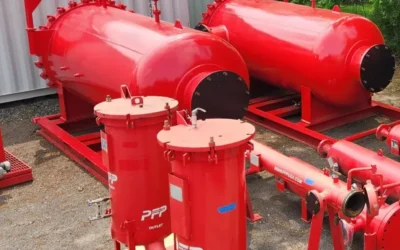
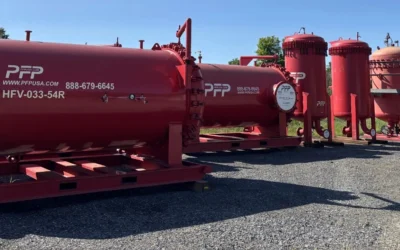
Heater skid in use with high-velocity flushing skid rental from PFP.
In many cases, heating the fluid is the difference between a partial flush and a fully successful one.
Achieving Turbulence & Avoiding Laminar Flow
In high velocity flushing applications, achieving a Reynolds number above 4,000 is required to establish fully turbulent flow.
Below that threshold, flow begins to transition or remain laminar which drastically reduces the system’s ability to dislodge or carry contaminants.
Check out our blog on the differences between laminar & turbulent flow to learn more.
High Velocity Flushing with Heater Skids from Precision Filtration Products
At PFP, we regularly integrate custom and standard heater skids into high flow flushing operations.
We provide access to an extensive fleet of filtration equipment rentals, including high flow flushing units, along with heater skid systems specifically used to improve flushing performance. These rental units allows systems to reach required flow conditions without having to purchase the equipment outright for a one-time or short-term application.
Save on Equipment Without Sacrificing Performance!
With PFP, you can access the heater skids and flushing systems you need without the cost of a permanent installation.
Reach out to us to discuss a flushing setup that delivers the performance you need.