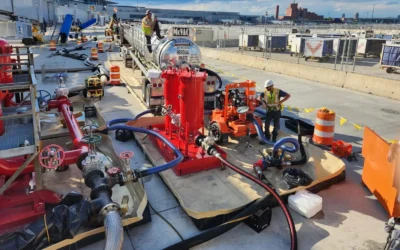
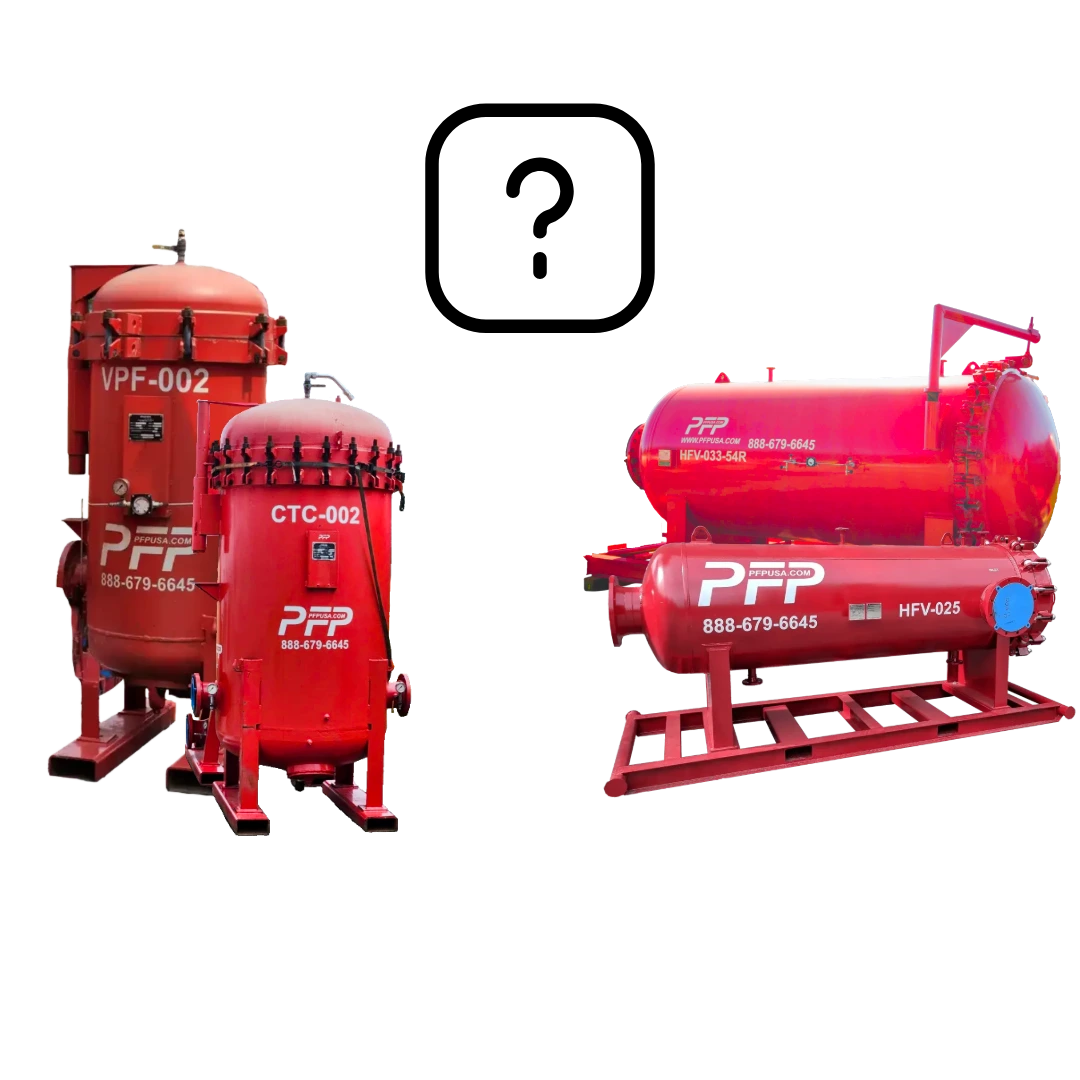
Not sure what kind of vessel you need? Call PFP.
The right vessel orientation can make or break a filtration operation. For vessel configuration support, call (888) 679-6645.
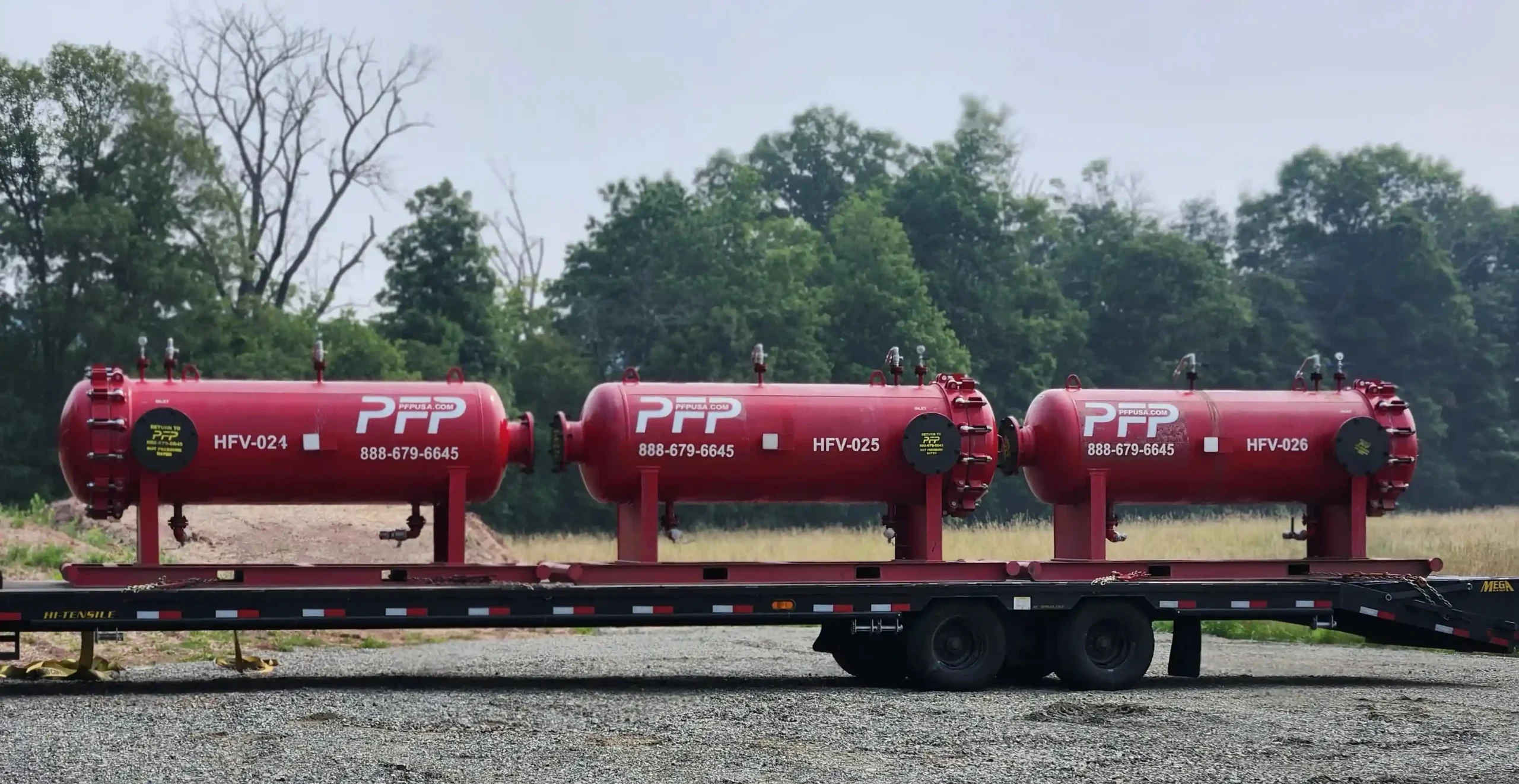
Filter vessel orientation can have a meaningful impact on how filtration equipment fits into a jobsite.
Beyond fitting into the site, vessel orientation also impacts how easily it can be serviced and how practical it is to operate over the duration of a project.
Vertical and horizontal vessels can both support high-capacity industrial filtration, but the best configuration will depend on:
- Available space
- Cartridge access
- Piping layout
- Drainage requirements
Ultimately, the best choice depends on how the vessel will be handled out in the field.
Vertical Vessels Offer a Smaller Footprint
Vertical filter vessels are often a strong fit where floor space is limited. Because the vessel body extends upward rather than across the site, substantial filtration area can be placed within a relatively compact footprint.

That can be useful in crowded process areas, terminals, refineries, mechanical rooms, and temporary filtration setups where equipment must fit around existing piping or operating assets.
The tradeoff is overhead clearance. Cartridge removal may require significant space above the vessel, particularly when long elements are used. Manufacturer installation guidance commonly specifies dedicated clearance above vertical housings for cartridge removal, so that requirement should be considered before the vessel is positioned.
Horizontal Vessels Can Improve Cartridge Access
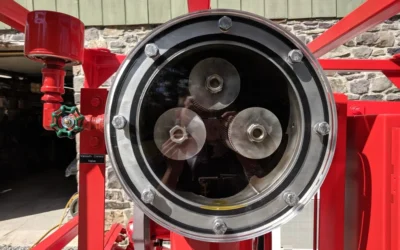
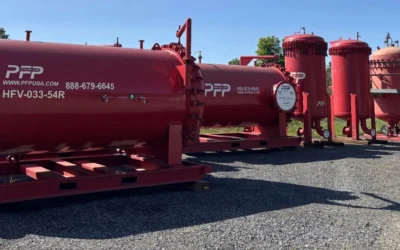
Horizontal vessels require more ground space, but they can make cartridge access easier when overhead clearance is limited.

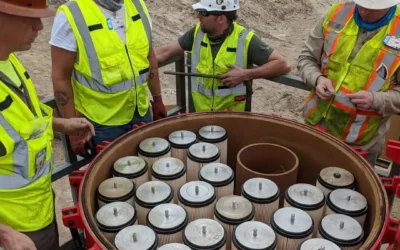
Instead of pulling long elements vertically from the top of the housing, cartridges can be removed from the side. This can reduce the need for elevated platforms or overhead working space on large vessels. Some high-flow horizontal designs specifically use hinged covers or tipped configurations to simplify element removal and service access.
This becomes increasingly important as element length and vessel capacity increases. A vessel may fit physically within a space while still being difficult to service if the required cartridge-removal clearance was not considered during equipment placement.
Consider Element Change-Out Requirements
Service access should always be evaluated before a vessel arrives on-site.
Important considerations include:
- Cartridge length
- Cover opening direction
- Overhead clearance
- Side clearance
- Access for lifting equipment
- Space for personnel to remove and replace elements
As mentioned above, horizontal vessels offer an advantage for element change-outs because of easier access. For temporary filtration projects, this matters because a vessel that is difficult to service can increase labor requirements every time elements need to be changed.
Drainage and Venting Affect Field Operation
Proper drainage and venting are important with either orientation.
Before a vessel is opened, the housing typically needs to be isolated, vented, and drained. Industrial vessel manuals commonly specify opening the top vent while draining from the bottom to safely remove fluid and release trapped air.
Orientation can influence how easily residual fluid leaves the housing. Horizontal and tipped-horizontal vessels may incorporate dedicated low-point drains to improve evacuation of retained fluid. Some designs are specifically configured so the vessel drains toward one end, reducing fluid remaining inside during element changes.
That can matter when handling fuel/oil/chemicals or other process fluids where spills and retained product complicate maintenance.
High-Flow Applications May Favor Different Configurations
Large-volume filtration adds another layer to vessel selection.
As flow requirements increase, vessels may use larger-diameter connections, longer cartridges, multiple elements, or greater overall housing volume. Both vertical and horizontal high-flow vessels are available, including multi-element designs intended for substantial industrial flow rates.
For these applications, orientation should be evaluated alongside:
- Required filtration area
- Flow rate
- Piping connection location
- Available site footprint
- Element-change access
- Rigging requirements
PFP offers high-flow filter vessels for large-capacity temporary filtration projects where vessel configuration must be matched to both process requirements and site conditions.
Rental Applications Add Mobilization and Placement Considerations
Temporary equipment has different practical requirements than a permanently installed vessel.
Rental vessels may need to be transported into an active facilitiy, unloaded with a forklift or crane, positioned near temporary piping, and removed again when the project is complete. Orientation affects how easily that equipment can be placed within the available work area.
Vertical vessels may help conserve valuable ground space. Horizontal vessels may offer advantages where height restrictions, cartridge access, or temporary piping arrangements make a lower-profile configuration more practical.
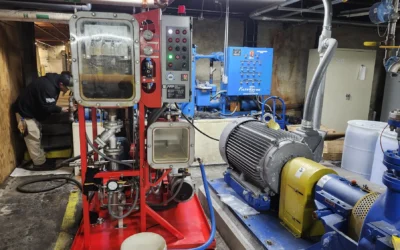
PFP maintains filter vessel rentals for industrial particulate filtration applications and can help evaluate vessel configuration alongside flow, fluid, contamination level, operating pressure, and project logistics.
Which Filter Vessel Orientation Should You Use?
As with many industrial filtration decisions: the answer depends on the application.
Neither vertical nor horizontal vessels are universally better.
Vertical vessels are often well suited to applications where footprint is limited and adequate overhead clearance is available. Horizontal vessels can be advantageous where cartridge access, height restrictions, or maintenance logistics are more important.
The correct choice should account for both process conditions and the physical realities of the jobsite. Selecting orientation early can make installation easier, simplify element changes, improve drainage, and reduce unnecessary handling once filtration begins.
To discuss vessel orientation for your project, call (888) 679-6645.
Our specialists are always available to discuss the proper vessel configuration for your industrial filtration application. To learn more, call or submit a form on our contact page.