Find the right size filter vessel for your application.
PFP can assist in sizing and prescribing the correct filter vessel for your industrial application. Call (888) 679-6645.
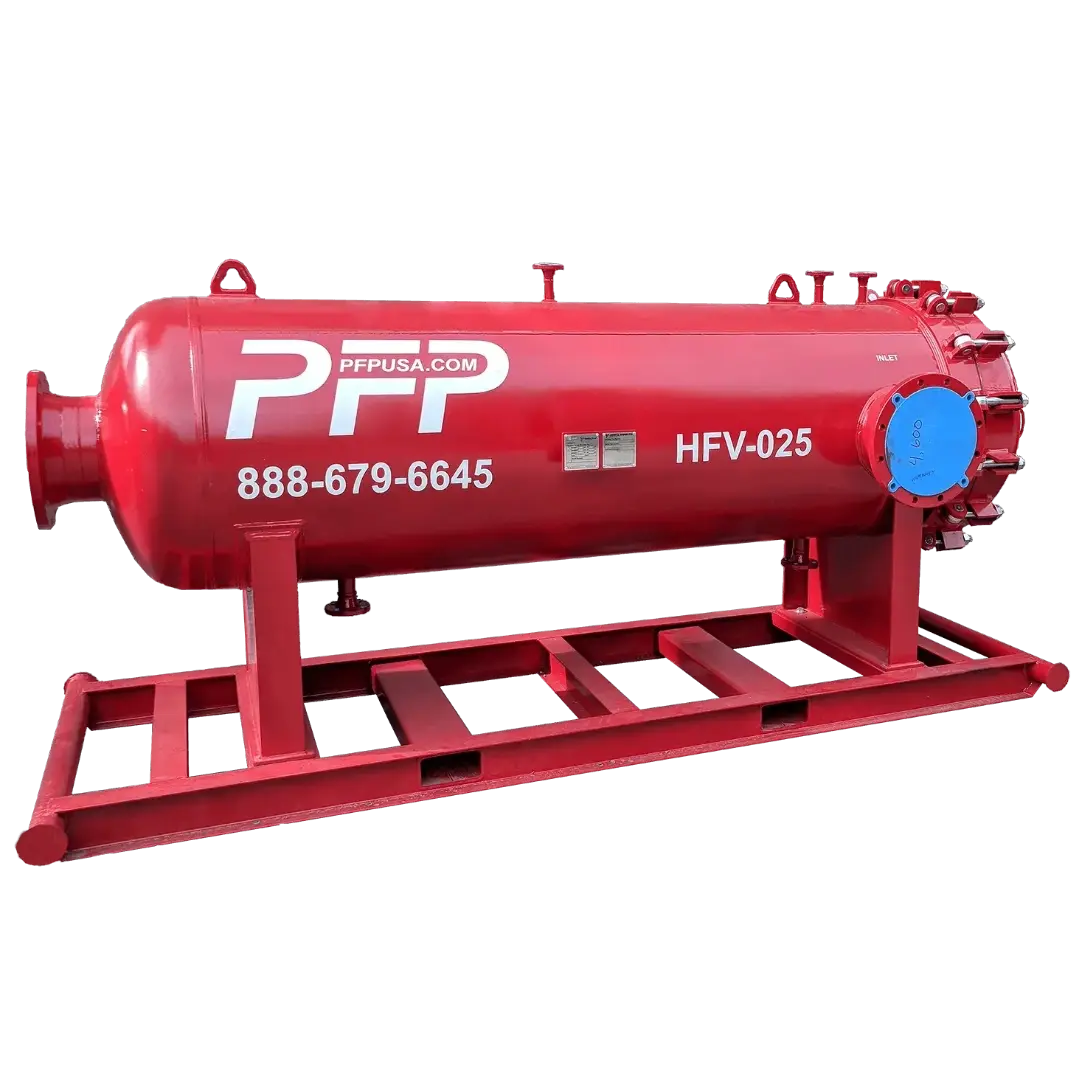
Choosing the right filter vessel starts with the application.
Of course flow rate is a major factor in selecting the correct vessel, but it is only part of the sizing process.
Sizing requirements depend entirely on:
- Flow Rate
- Fluid Type
- Contaminant Loading
- Micron Rating
- Operating Pressure
- Temperature
- Allowable Differential Pressure
- Required Service Interval
These variables significantly affect how much filtration area is needed.
Start With Required Flow Rate
The first question is simple: how much fluid needs to pass through the system?
A vessel sized for 200 GPM is very different from one expected to handle several thousand GPM. Higher flow normally requires more filter elements, greater effective filtration area, larger inlet and outlet connections, or multiple vessels operating in parallel.
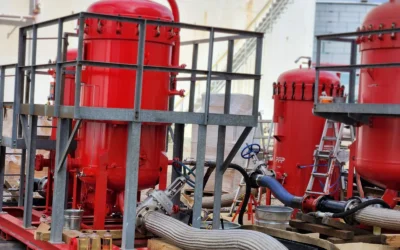
For temporary industrial applications, PFP offers filter vessel rentals for a wide range of particulate filtration duties. Applications involving exceptionally high throughput may require dedicated high flow filter vessels designed for large volume filtration.
Consider The Fluid Being Filtered
Two applications operating at the same flow rate may require completely different vessel configurations.
Water, diesel, fuel, hydraulic oil, lubricating oil, chemicals, and heavier process fluids do not move through filter media the same way. Higher viscosity fluids create more resistance, which can increase differential pressure and reduce the practical flow capacity of a given filter element.
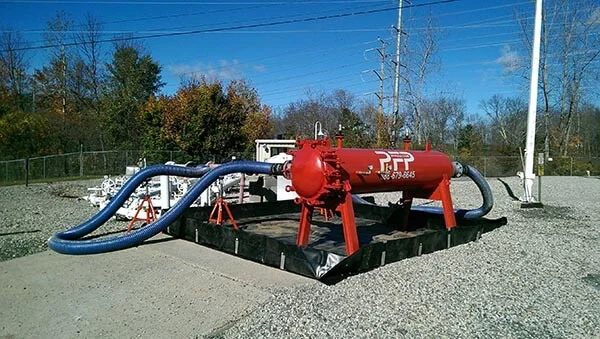
Temperature also matters because viscosity can change significantly as a fluid heats or cools. A vessel should therefore be selected around actual operating conditions rather than a theoretical maximum flow rating.
Select the Right Micron Rating and Filter Configuration
The required level of cleanliness also affects vessel sizing.
Removing large debris at 100 microns generally places a different hydraulic load on a system than filerting the same fluid at 5 or 10 microns. Finer filtration can create greater resistance through the media, especially as contamination accumulates.
Bag and cartridge vessels also behave differently depending on the application. Bag filters are commonly used where higher solids loading or coarser particulate removal is required, while cartridge systems can provide greater surface area and finer filtration.
The correct choice depends on:
- Contaminant Type
- Required Outlet Cleanliness
- Flow Rate
- Expected Element Life
Accounting for Operating Pressure and Differential Pressure
Filter vessels must be compatible with both the system operating pressure and the pressure developed across the filter media.
A clean filter normally begins with relatively low differential pressure. As the element loads with contamination, differential pressure will increase. Vessel sizing should leave enough filtration area to maintain acceptable flow throughout the operating cycle instead of only when the filters are new.
Available pump pressure, downstream restrictions, vessel pressure rating, piping size, and maximum allowable differential pressure should all be considered before equipment is selected.
When Do You Need a High Flow Filter Vessel?
High flow vessels become important when conventional rental vessels cannot provide enough filtration area or hydraulic capacity for the required turnover rate.
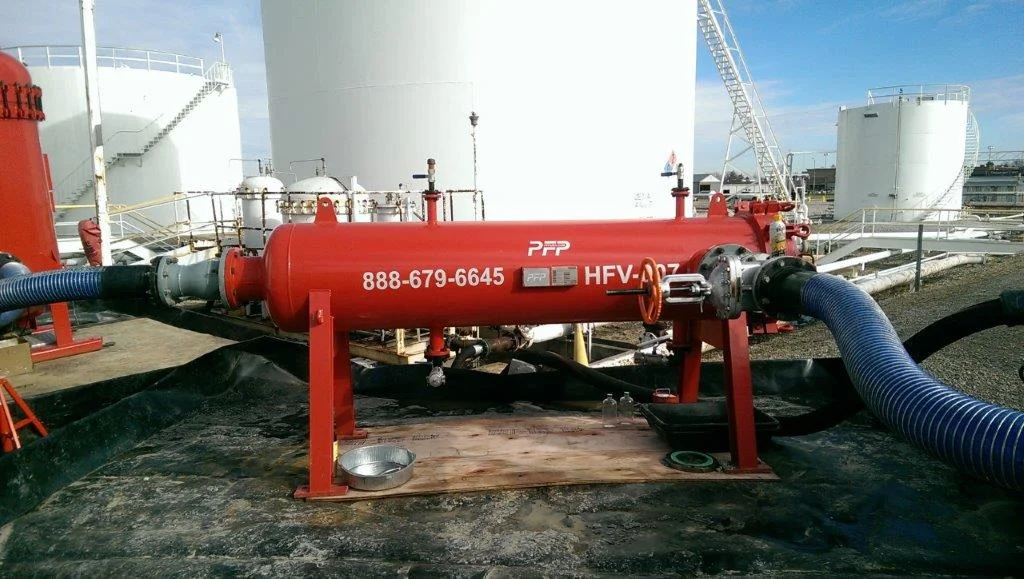
Common applications include for high flow filter vessels include:
- Pipeline flushing
- High velocity flushing
- Refinery turnarounds
- Bulk fuel transfer
- Tank circulation
- Large process systems
- Commissioning work
- Temporary filtration projects where flow can reach thousands of gallons per minute
In addition to our fleet of rental filtration equipment, PFP maintains high flow filter vessels for large capacity industrial filtration applications, including configurations capable of handling extremely high flow rates.
Get The Vessel Size Right Before Mobilization
Undersizing a filter vessel can lead to excessive differential pressure, reduced flow, frequent element changes, and signficiantly longer project timelines.
Oversizing usually causes fewer operational problems, but it can add unnecessary equipment, footprint, and cost.
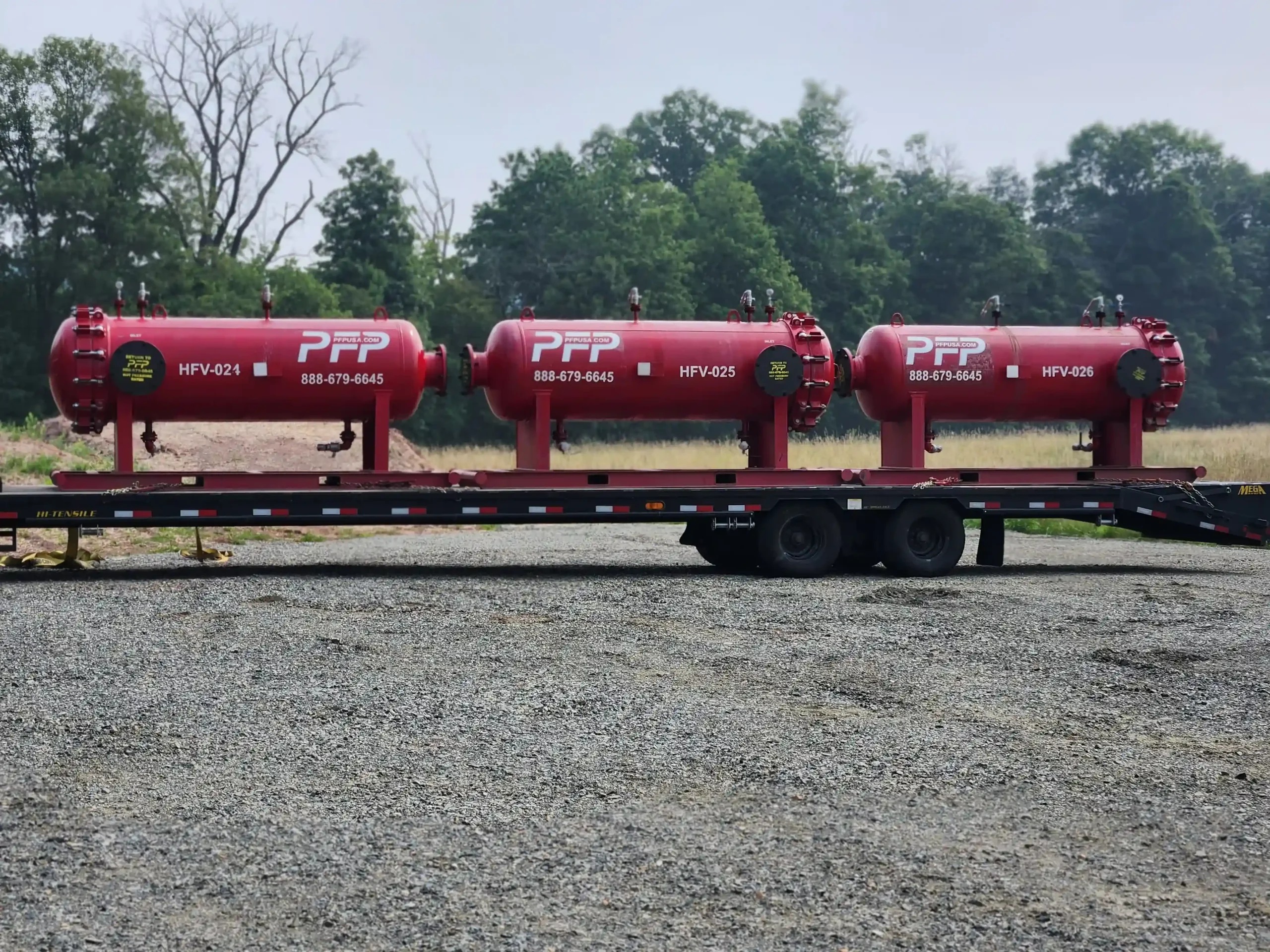
PFP can review all relevant operating conditions and project requirements in order to prescribe the an appropriate vessel configuration, filter media, and supporting rental equipment before mobilization.
To discuss vessel sizing for your project, call (888) 679-6645.
Our expert specialists are always available to discuss your unique project requirements. To learn more, call or submit a form on our contact page.