

handheld filter unit
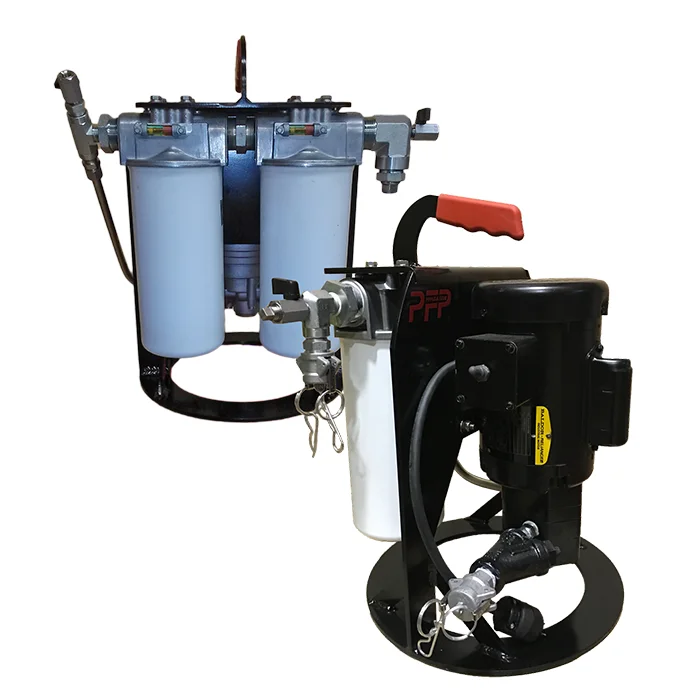
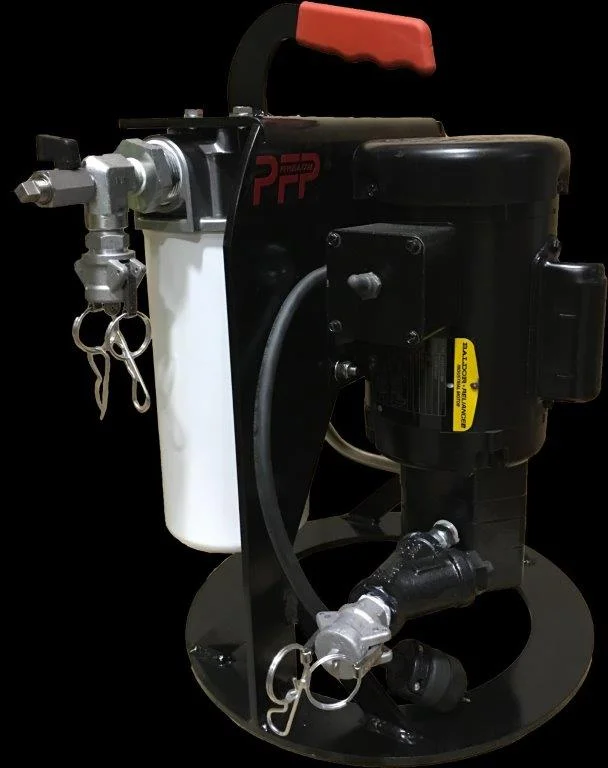
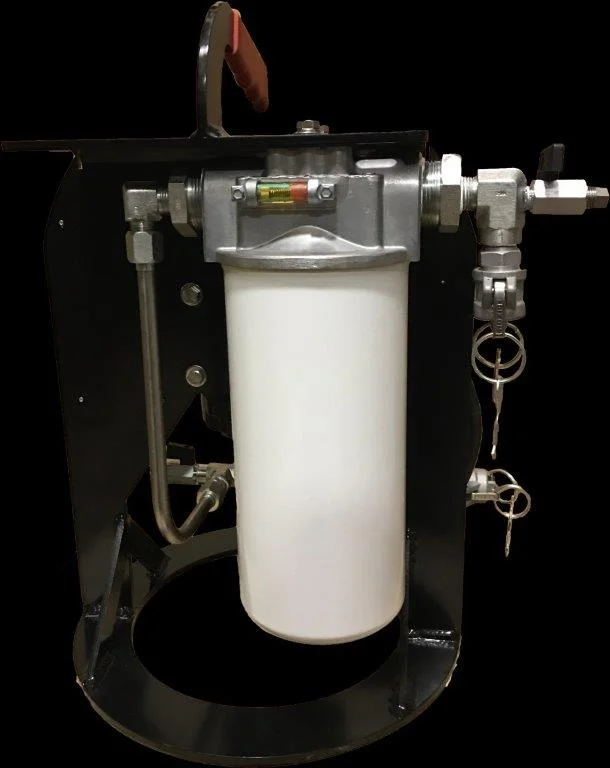
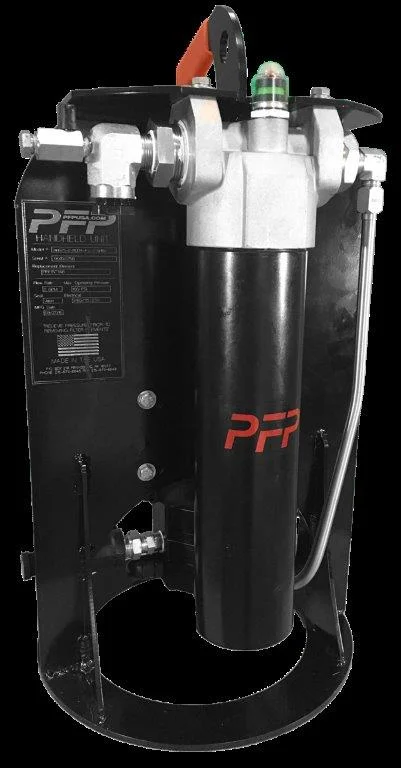
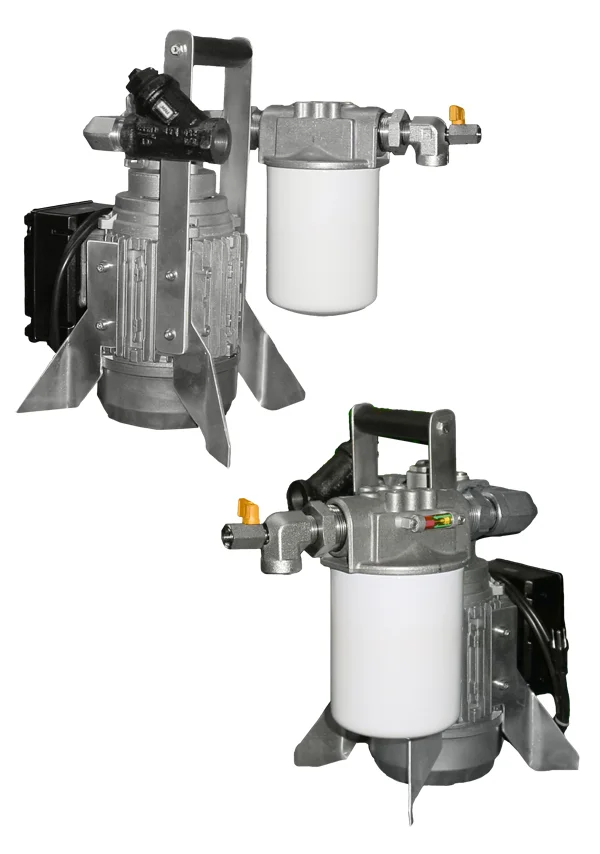
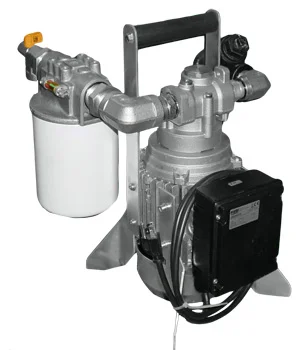

The PFP Handheld Filtration System is designed to filter fluids with a viscosity of 50 – 2,000 cSt. It’s ideal for filtering new hydraulic fluids during transfer and replenishment, flushing fluids already in service, removing particulate and water contamination, and conditioning bulk oil before use.
The Handheld Filtration System is constructed with strong, lightweight aluminum support legs and an ergonomic style handle. Its total dry weight is approximately 40 pounds. It is available with Beta 1000 rated microglass and water-absorbing filter elements. It also includes oil sampling port on the outlet connection to provide ISO 4406 code comparisons. This will allow you to meet your target ISO cleanliness codes and prolong the life of your equipment and fluids.
The Handheld Filtration System comes standard with a 110 Volt, 60 Hz motor, and is also available in other electrical configurations to meet your needs. Do you have any questions? Would you like more information? Feel free to contact us.
Have questions? Reach out to us – we’re here to help!
Features and Benefits:
- Standard flow rate of 2.4 GPM
- BETA 1000 rated filter elements
(per ISO 16889 standards) - Filter elements that remove water
- Oil sampling port
- True pressure differential indicators
- 25 PSID by-pass built into the head
- Viscosity range of 50 to 2,000 cSt
- Lightweight and easy to carry – weighs only 40 pounds!
Downloads
FAQs
When is a handheld filter unit the right choice versus a larger filtration system?
A handheld filter unit is ideal for low-volume filtration tasks, point-of-use fluid cleanup, and applications where portability is required. They are commonly used for topping off systems, transferring fluids between containers, servicing reservoirs, or maintaining equipment that does not justify a full-scale filtration skid. For targeted contamination control, handheld units provide flexibility without excessive setup.
What types of fluids can a handheld filter unit be used with?
Handheld filter units are commonly used with hydraulic oils, lubricating oils, gear oils, and other industrial fluids. Fluid compatibility depends on viscosity, temperature, and chemical makeup, so proper filter selection is critical. When matched correctly, handheld units allow effective particulate removal during routine maintenance and fluid handling operations.
Can a handheld filter unit be used for contamination control during fluid transfer?
Yes. Handheld filter units are frequently used during fluid transfer to prevent introducing contamination into clean systems. Filtering fluids as they are moved from drums, totes, or reservoirs helps maintain cleanliness targets and reduce wear on critical components. This makes handheld filtration an effective preventative maintenance tool.
How effective are handheld filter units at improving fluid cleanliness levels?
When properly configured, handheld filter units can significantly reduce particulate contamination during service and transfer operations. While they are not intended to replace high-flow, continuous filtration systems, they are highly effective for spot filtration and maintaining cleanliness between larger filtration intervals.
Are handheld filter units suitable for use in the field or remote locations?
Handheld filter units are designed for portability and ease of use, making them well suited for field maintenance, remote sites, and confined spaces. Their compact size allows technicians to bring filtration directly to the equipment rather than transporting fluids back to a central filtration location.
How do handheld filter units support preventative maintenance programs?
Handheld filter units allow maintenance teams to filter fluids during routine service, top-offs, and fluid changes. By removing contaminants before they enter the system, these units help extend fluid life, reduce component wear, and support overall equipment reliability without disrupting operations.
Want the most up to date information from PFP?
Sign up for our E-mail newsletter!
Want the most up to date information from PFP?
Sign up for our E-mail newsletter!